
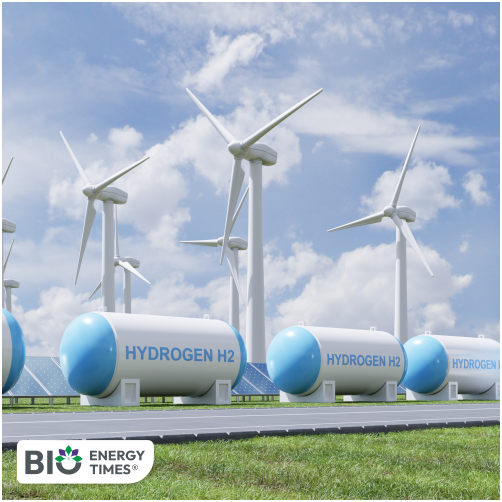
China and India are significantly expanding their investments in green hydrogen even as Western nations scale back their earlier ambitions in the sector, amid cost pressures that have proven steeper than initially anticipated, Outlook Business reported.
China is a participant in a $2 billion project that uses renewable energy to power banks of electrolysers producing hydrogen molecules for use in fertiliser manufacturing, marine fuel, and low-emission steelmaking. Separately, Beijing has designated green hydrogen as a frontier industry in its most recent five-year plan, placing it alongside other advanced technologies and signalling a long-term policy commitment.
China invested $3.7 billion in green hydrogen production last year — more than double the level invested by the United States — according to Minh Khoi Le, head of hydrogen at energy research firm Rystad Energy, as quoted by Reuters. Rystad projections, cited by Reuters, indicate that China will have approximately 2.6 million tonnes of green hydrogen capacity online by 2031, representing a cumulative investment of $26 billion.
India, meanwhile, is targeting annual green hydrogen output of 5 million metric tonnes by 2030, backed by government subsidies worth $2.1 billion, according to Reuters. The report noted that this target is roughly five times the current size of the global green hydrogen market and approximately double China’s projected output by the same year. India’s approach centres on energy security, with the government offering subsidies and designating guaranteed off-takers such as refineries, fertiliser plants, and steelmakers to draw in private investment.
The stepped-up commitments from both Asian economies contrast with a retreat among Western nations, which have wound back green hydrogen goals set earlier this decade after cost constraints emerged as a larger obstacle than initially projected.
According to the International Energy Agency’s (IEA) 2024 report, global low-emission hydrogen production based on announced projects could reach up to 49 million tonnes annually by 2030, up from less than 1 million tonnes in 2023. However, the IEA’s 2025 review cautioned that technical, financial, and regulatory barriers could affect the final realised output. The International Renewable Energy Agency (IRENA) noted that while declining renewable power costs are central to making green hydrogen economically viable, high electrolyser costs and gaps in distribution infrastructure continue to slow deployment across several regions even as Asia accelerates its investment pipeline.
China and India double down on green hydrogen as Western countries pull back on clean energy targets

RELATED ARTICLES












