
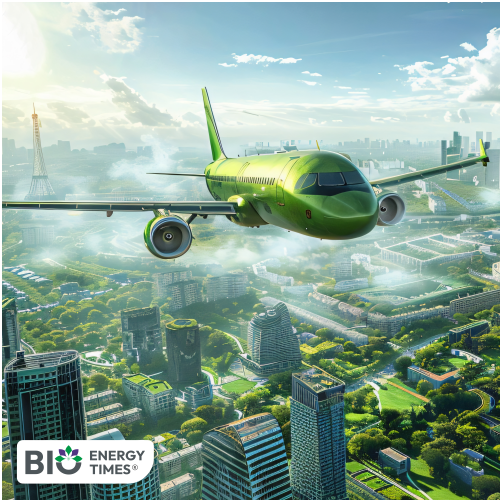
Brussels: Growing concerns over energy security following the conflict involving Iran are giving fresh momentum to Europe’s synthetic aviation fuel industry, with supporters arguing that domestically produced sustainable jet fuel could help reduce dependence on imported fossil fuels.
Industry experts say the disruption to global oil and gas supply routes, particularly concerns surrounding the Strait of Hormuz, has strengthened the case for electro-sustainable aviation fuel (e-SAF), a synthetic fuel produced using hydrogen and carbon dioxide, Reuters reported.

At a facility near Frankfurt, Germany, hydrogen and carbon dioxide sourced from nearby industrial plants are processed and converted into jet fuel. The plant, operated by German company Ineratec, is currently the only facility in Europe producing e-SAF.
According to Mariano Berkenwald, Head of Strategy at Ineratec, the conflict has significantly improved the commercial case for the fuel. While e-SAF has traditionally been promoted for its environmental benefits, recent geopolitical developments have highlighted its potential role in strengthening Europe’s energy independence.
Supporters say e-SAF can reduce aviation-related greenhouse gas emissions by up to 90 percent compared with conventional jet fuel. Aviation accounts for up to four percent of total greenhouse gas emissions in the European Union.
The European Union has made sustainable aviation fuels a key part of its transport decarbonisation strategy. Under current regulations, fuel suppliers must ensure that e-SAF accounts for at least 1.2 percent of aviation fuel supplied at EU airports by 2030, with the requirement increasing to 35 percent by 2050.
Despite these targets, the industry has struggled to expand because of high production costs and limited investment.
Although Ineratec began production last year, many planned projects remain on hold. According to Camille Mutrelle of advocacy group Transport & Environment, around 40 projects under development across Europe have yet to secure the financing needed to begin construction.
She said Europe needs approximately nine additional large-scale facilities to meet its 2030 target, but none have yet reached the production stage.
Ineratec’s facility currently produces around 2,500 tonnes of fuel annually, enough to power only about 50 transatlantic flights.
With production volumes still limited and costs remaining high, the sector has faced uncertainty over whether the European Union might revise its blending requirements. Industry participants had expected a review of the mandate next year.
However, the recent geopolitical situation has shifted attention toward the strategic value of domestically produced fuel. Since e-SAF can be manufactured entirely from resources available within Europe, it has also attracted interest from military organisations concerned about fuel security.
Aviation fuel specialist Matteo Mirolo said armed forces could become important customers because reliable fuel supplies are critical for military aircraft and support operations.
Although e-SAF currently costs about ten times more than conventional kerosene, industry supporters believe government backing and growing security concerns could help accelerate investment.
Germany’s military has already tested fuel produced by Ineratec, while several other governments have reportedly expressed interest in developing domestic production capacity.
Ourania Georgoutsakou, Managing Director of Airlines for Europe, said the current situation highlights the importance of strengthening Europe’s energy independence. She called for greater efforts to make sustainable aviation fuels more affordable and widely available.
Supporters of the technology believe stronger government involvement could help attract investors who have so far remained cautious about the sector. Many energy companies have instead focused on biofuels, which currently offer more attractive returns.
However, biofuel production often depends on imported waste oils and fats, particularly from China, creating separate concerns about supply security.
The European Commission said it is considering the creation of a dedicated financing mechanism to support e-SAF development and accelerate investment in production facilities.
A Commission spokesperson said Europe needs greater access to domestically produced energy, including sustainable aviation fuels.
While interest in the sector has increased, Ineratec’s Berkenwald said inquiries have yet to translate into major commercial agreements. Nevertheless, he expressed optimism that growing attention to energy security could help drive future investment and industry growth.