
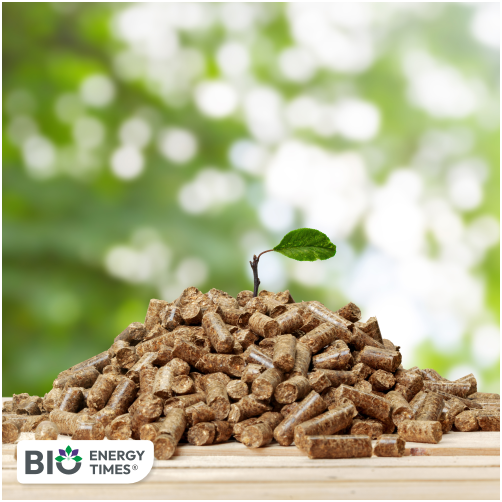
An international team of scientists has developed a new technology aimed at increasing electricity generation from biomass while also supporting hydrogen production during the regasification of liquefied natural gas (LNG).
The findings, published in the International Journal of Hydrogen Energy, were produced by researchers from Russia, Arab nations and African countries. Among the contributors was Evgenii Solomin, Professor at the South Ural State University’s Institute of Engineering and Technology, according to South Ural State University.

The researchers proposed combining biomass gasification with LNG regasification to improve energy efficiency and reduce energy losses during power generation.
Biomass gasification is a process that converts materials such as wood and agricultural waste into combustible gas for electricity production. However, scientists noted that a large portion of usable energy is normally lost during the process.
To address this, the research team suggested linking the gas generator system with LNG regasification. Before LNG can be transported through pipelines and storage systems, it must be converted back into gas form, a process that releases large amounts of unused cold energy.
According to the study, part of this cryogenic energy can be used to improve the steam-turbine cycle connected to the biomass gas generator, helping increase electricity generation efficiency.
The researchers found that efficiency rises as biomass input and temperature increase, although performance begins to decline once temperatures exceed 1200 Kelvin.
The study also proposed using some of the recovered energy to power an electrolyser, a device that separates water into oxygen and hydrogen. The hydrogen produced could then be used as an additional fuel source.
Scientists said the combined system could achieve an energy efficiency of 19.8%, meaning nearly one-fifth of the biomass’s potential energy could be converted into electricity and hydrogen production. They added that the technology still has scope for further improvement.
The researchers said the project supports efforts to develop environmentally friendly and cost-effective energy technologies while reducing waste in industrial energy systems.