
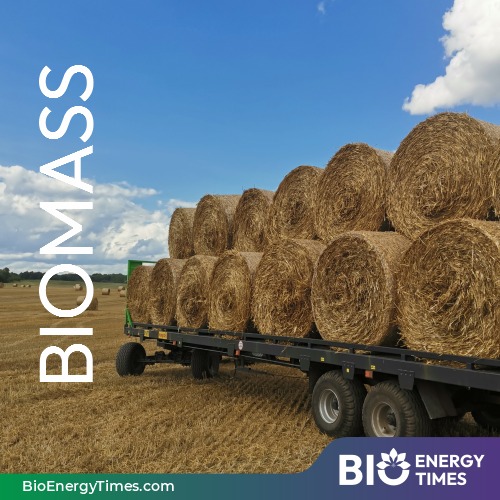
Vedanta Power is scaling up the use of agricultural waste as a fuel at its Talwandi Sabo Thermal Plant in Punjab, with the plant co-firing around 3.61 lakh metric tonnes (LMT) of biomass during FY2025-26, equivalent to approximately 5.21% of its total fuel consumption. By diverting paddy straw from open-field burning, the initiative helps reduce pollution and harmful emissions associated with stubble burning, according to a press release.
The initiative is aimed at creating a productive use for paddy straw and building an organised supply chain for agricultural residue, while providing farmers an opportunity to derive value from crop residue that was earlier treated largely as waste. It also provides an alternative pathway to open-field burning during the harvest season.

The Talwandi Sabo plant, located in Mansa district, has been using biomass co-firing to convert paddy straw into energy. The process involves collection, baling, transportation and processing of agricultural residue before it is supplied to the power plant, creating linkages between farmers, biomass aggregators, logistics operators and the energy sector and demonstrating a more productive alternative to stubble burning.
The move assumes significance for Punjab, where the seasonal management of paddy straw remains a key challenge. In Mansa district, reported stubble-burning incidents during the 2025 harvesting season declined by approximately 87% compared with 2023. More than 100 villages reported zero farm-fire incidents, while over 28,000 acres of farmland were protected from burning.
While the reduction in farm fires is influenced by several factors, the availability of an organised biomass utilisation route can provide farmers and other stakeholders with an additional alternative to open-field disposal of crop residue.
“Biomass co-firing demonstrates how industrial demand can help create a market for agricultural residue and build a more organised value chain around it. By converting paddy straw into a productive source of energy, we are looking at the stubble challenge not only from an environmental perspective but also through the lens of economic value creation for rural communities,” said Rajinder Singh Ahuja, Chief Executive Officer, Vedanta Power.
The biomass programme has also resulted in the development of a rural supply chain around agricultural residue. Collection and aggregation create opportunities for local operators, while transportation and processing generate additional activity around the biomass ecosystem. For farmers, the initiative offers a potential avenue to derive value from paddy straw that has traditionally been treated primarily as waste.
“I am giving all my paddy straw to the biomass manufacturing plants so that this agricultural waste can be put to the best possible use. Instead of burning the straw in the fields, it is converted into environmentally friendly biomass pellets and used as fuel in thermal power plants. This helps prevent stubble burning, reduce air pollution, and improve the air quality of our region.” said Avtar Singh from Village Raipur, Mansa.
The model also supports the broader principle of a circular economy by recovering agricultural residue and converting it into useful fuel. For the power sector, biomass co-firing provides an avenue to integrate a renewable fuel source into existing thermal generation infrastructure while contributing to agricultural-residue management.
Vedanta Power is among the private power producers looking to strengthen the role of alternative fuels and more efficient resource utilisation as India’s energy requirements continue to grow. The experience at Talwandi Sabo also highlights the potential for industry-led demand to complement government and community efforts aimed at reducing crop-residue burning.