

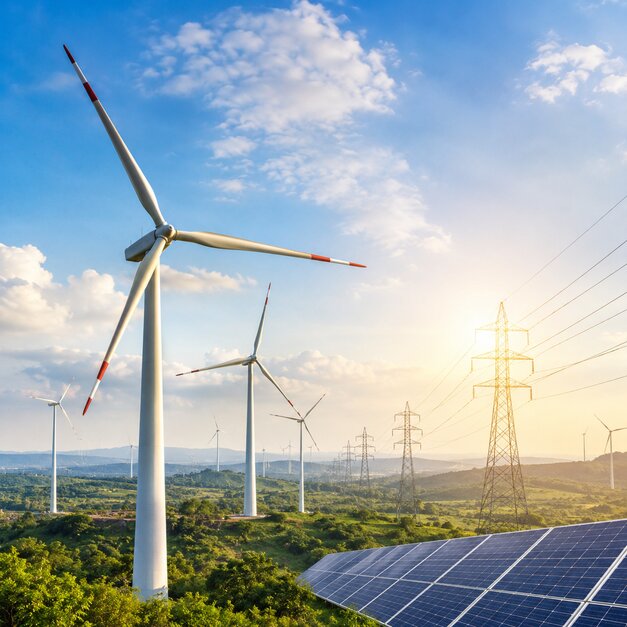
New Delhi: Financing remains the biggest challenge to India’s clean energy transition, as inadequate investment in electricity transmission and grid infrastructure limits the distribution of renewable power despite the country’s growing renewable energy capacity, Australian economist Nicki Hutley has said, ANI reported.
In an exclusive interview with ANI, Hutley said India had attracted significant investment in renewable energy generation but needed to increase spending on transmission networks and grid infrastructure to ensure that the electricity produced could reach consumers.

“There has been strong investment in renewables and other clean power, but not enough investment in the transmission and grid infrastructure needed to distribute that power,” she said.
She pointed out that large infrastructure companies needed access to adequate funding to develop these networks. However, regulatory hurdles and delays in acquiring land continued to create difficulties for such projects.
Hutley identified financing as the biggest barrier and said reducing regulatory restrictions and the cost of capital would be important to attracting more investment into India’s clean energy infrastructure.
She stressed the need for better coordination among stakeholders and policymakers to create a supportive regulatory environment and make it easier for investors to bring funds into the country.
Hutley said there was no shortage of global capital, pointing to large pension funds in countries such as Australia, the United Kingdom and Canada that could invest in India’s clean energy sector. However, investors needed projects that offered suitable returns while allowing them to manage financial risks.
She also expressed concern over India’s target of achieving net-zero emissions by 2070, saying it was too distant to align with the goals of the Paris Agreement, even if the country’s emissions peaked by 2040, as currently expected.
According to her, accelerating the clean energy transition, even by a small margin, without affecting India’s economic growth would benefit both the country and the global effort to address climate change.
Hutley also highlighted the electrification of transport as an important step towards this transition. She said electric mobility could reduce costs and air pollution while contributing to India’s climate commitments and global efforts to meet the Paris Agreement goals, according to ANI.