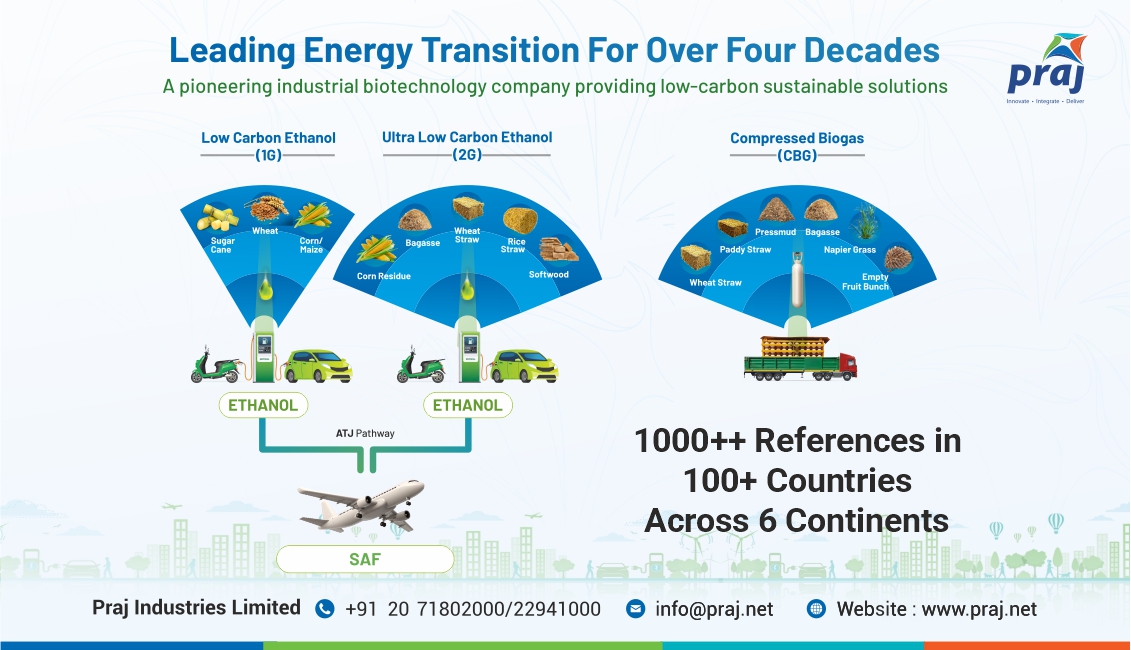


Sugar mills across western Uttar Pradesh are expanding their ethanol production capacity and using multiple feedstocks, strengthening the region’s position as a major supplier of ethanol for petrol blending, The Statesman reported.
Districts including Saharanpur, Shamli, Muzaffarnagar, Baghpat, Meerut and Bijnor are seeing an expansion of ethanol manufacturing facilities. Mills are diversifying their operations by producing ethanol from sugarcane juice, molasses, maize and broken rice instead of relying solely on sugar production.

The expansion has been driven by the Centre’s ethanol blending policy and its efforts to encourage sugar mills to invest in ethanol production, making western Uttar Pradesh an important contributor to the country’s ethanol supply.
The Unn sugar mill in Shamli is among the prominent facilities in the region. Its distillery has a capacity of 300 kilolitres per day (KLPD), making it the largest ethanol plant in western Uttar Pradesh. The facility, developed over three years, began producing ethanol from maize and rice in May. Its production is supplied to Panipat, Meerut and Mathura.
The region has an extensive network of sugar mills, including Shami, Unn, Deoband, Gangnuli, Gagalheri and Shermau in Saharanpur district; Titawi, Mansurpur, Khatauli, Bhaisana, Rohana, Morna, Khairikheri and Tikola in Muzaffarnagar; and Ramala, Baghpat and Malakpur in Baghpat district, among others.
Several sugar mills have also established distilleries to diversify their operations. Muzaffarnagar district has three distillery plants, including facilities at Mansurpur and Khatauli, while the distillery linked to Thanabhawan sugar mill is located at Gagalheri in Saharanpur district.
The growing focus on ethanol has also changed the economics of sugar mills, which were earlier largely dependent on sugar sales. Higher sugar production and weak prices had affected profitability and contributed to delays in payments to farmers.
Ethanol production has provided mills with an additional source of income by allowing them to divert sugarcane towards fuel production. This has helped mills manage sugar output, improve cash flow and make timely payments to farmers for their cane supplies.
The expansion of distilleries and the use of different raw materials are further strengthening western Uttar Pradesh’s role in India’s ethanol industry.