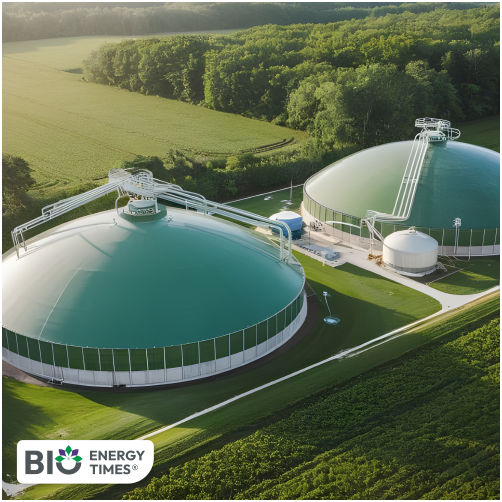
Indonesia’s palm oil industry has significant untapped potential to produce biogas from palm oil mill effluent (POME), but limited adoption of methane capture technology is preventing the country from fully exploiting the resource, Bioenergy Insight reported.
The industry generates an estimated 125 million tonnes of POME each year. According to the Palm Oil Agribusiness Strategic Policy Institute (PASPI), the feedstock could produce about 3.6 billion cubic metres of biogas annually, while only around 15% of the available potential is currently being utilised.

PASPI Executive Director Tungkot Sipayung said each tonne of POME could generate about 28.8 cubic metres of biogas through methane capture technology.
Indonesia has about 16.8 million hectares of oil palm plantations, producing around 250 million tonnes of fresh fruit bunches annually. The scale of the industry provides a large and consistent source of organic waste for biogas production.
The gas can be used to meet energy requirements at palm oil mills or generate electricity. After purification, it can also be converted into bio-compressed natural gas (bio-CNG) for use as a transport fuel.
Methane capture from POME could also provide environmental benefits by reducing greenhouse gas emissions. National Research and Innovation Agency (BRIN) researcher Prof Dr Erma Yulihastin estimated that POME processing could reduce emissions by about 1,131 tonnes of carbon dioxide equivalent per month at each facility.
The development of POME-based biogas facilities could also create employment in construction, plant operation and maintenance.
However, adoption remains limited across the palm oil sector. Sipayung attributed the slow deployment to the absence of clear policy mechanisms and called for stronger government intervention.
He proposed three measures: establishing carbon-trading mechanisms specifically for methane capture from POME, making methane capture mandatory at palm oil mills while providing investment incentives, and requiring biogas to be blended into fossil-gas supplies.
“If these three policies were implemented, I believe all palm oil mills would invest in methane capture,” Sipayung said.
The government’s Palm Research Grant programme has begun supporting the development of POME-based biogas technology. However, industry participants say wider deployment will depend on greater regulatory certainty and financial incentives.
Without stronger policy support, a large share of the methane contained in palm oil mill effluent is likely to remain uncaptured, leaving Indonesia’s potential biogas resource underutilised.