
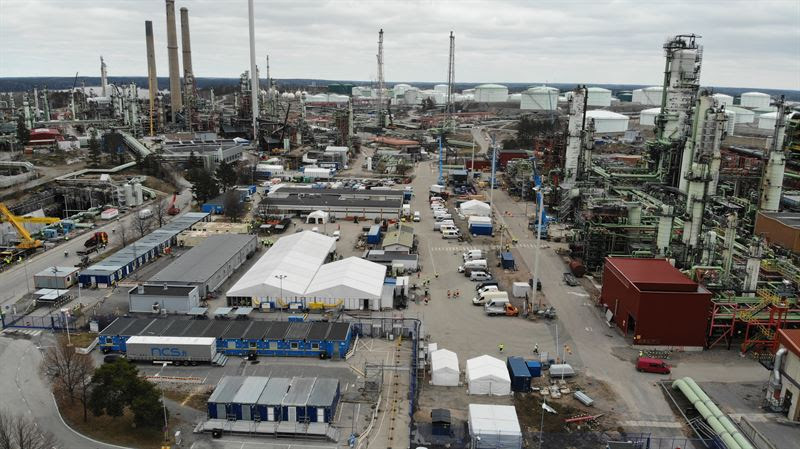
Bharat Petroleum Corporation Limited (BPCL) has partnered with Danish technology company Topsoe to introduce sustainable aviation fuel (SAF) production at its Mumbai refinery through the co-processing of renewable feedstock with conventional fuel, reported Chemical Industry Digest.
Under a technology licensing agreement, Topsoe will provide its Kerosene Hydrotreating Technology to support the project. BPCL plans to revamp its existing kerosene hydrotreater unit, which has a capacity of 4,000 metric tonnes per day, to process used cooking oil alongside conventional feedstock.

The upgraded facility will be capable of co-processing 5% renewable feedstock to produce SAF. By modifying its existing infrastructure, BPCL can enter SAF production without investing in a separate, dedicated manufacturing unit.
Work on the refinery upgrade has already commenced following the final investment decision, with commissioning targeted by the end of 2026. Once operational, the facility is expected to supply SAF for international passenger flights refuelling at Indian airports.
The project marks a step in BPCL’s efforts to expand its lower-carbon fuel portfolio and contribute to the development of India’s domestic SAF ecosystem. It also extends the company’s partnership with Topsoe, which has lasted more than two decades.
India is preparing its aviation sector for the Carbon Offsetting and Reduction Scheme for International Aviation (CORSIA), which comes into effect for the country from 2027. The government has also set SAF blending targets of 1% for international flights in 2027, 2% in 2028 and 5% by 2030.
These targets are expected to create demand for domestic SAF production. Co-processing renewable feedstocks in existing refinery units offers refiners a way to begin production while making use of their current infrastructure.
BPCL said the project supports its broader energy transition plans, including its target of achieving net-zero emissions in Scope 1 and Scope 2 by 2040. The company views SAF as an important option for reducing the aviation sector’s carbon footprint and strengthening India’s energy security.
Topsoe said its technology would allow BPCL to begin SAF production without the need for major changes to its existing refinery infrastructure, while providing flexibility to process both conventional and renewable feedstocks.