
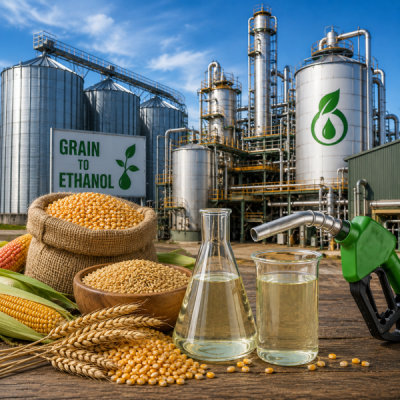
The Philippines is considering raising its ethanol blending requirement to 15% from the current 10% as the government explores cheaper and more diversified feedstock to expand domestic bioethanol production, according to a report by Philstar.
The Departments of Agriculture and Energy are examining how existing ethanol distilleries can increase output without significantly raising production costs. A key part of the plan is to diversify the raw materials used for bioethanol production beyond conventional sugarcane-based feedstock.

Agriculture Secretary Francisco Tiu Laurel Jr. and Energy Secretary Sharon Garin recently discussed the use of molasses, sugarcane juice, locally produced corn and palm oil, as well as ways to utilise idle distillery capacity.
The government believes that securing cheaper feedstock could make domestic bioethanol more competitive with imported fuel while supporting local farmers and related industries. Lower production costs could also eventually help reduce gasoline prices, according to Tiu Laurel.
Corn is among the feedstock options being examined, with the Agriculture Department planning to increase production through improved seeds, mechanisation and contract farming arrangements with ethanol plants. However, Tiu Laurel said commercial viability would depend on ethanol producers being able to source corn at competitive prices.
Palm oil is also being assessed as a potential feedstock for bioethanol and sustainable aviation fuel, although new plantations could take around three years to mature.
Sugarcane-based feedstock currently accounts for an estimated 325 million to 385 million litres of bioethanol production annually, compared with an existing industry capacity of more than 500 million litres.
The Philippine government is also finalising national bioethanol standards, with the draft currently undergoing public consultation. Diversifying feedstock and improving the utilisation of existing capacity could help support a higher blending mandate while reducing dependence on any single agricultural commodity.