

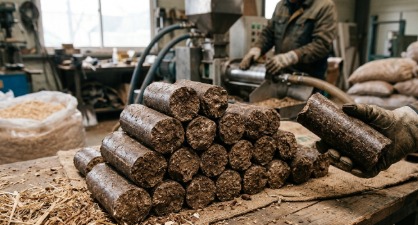
According to latest research by Growth Market Reports, the global biomass briquette market size reached USD 1.35 billion in 2024, driven by the escalating demand for sustainable energy solutions and increasing environmental concerns. The market is anticipated to exhibit a robust CAGR of 8.1% from 2025 to 2033, with the market size projected to reach approximately USD 2.67 billion by 2033. This significant growth trajectory is primarily attributed to the widespread adoption of biomass briquettes as an eco-friendly alternative to fossil fuels, coupled with supportive government policies and incentives for renewable energy adoption worldwide.
The global biomass briquette market is witnessing steady expansion as industries and households increasingly shift toward renewable and cleaner energy alternatives. Biomass briquettes, made from compressed agricultural and forestry waste, are gaining attention as a sustainable substitute for coal and other fossil fuels. Rising environmental concerns and supportive government initiatives are further accelerating their adoption across multiple sectors.

Key Growth Drivers
One of the primary factors driving the biomass briquette market is the growing need to reduce greenhouse gas emissions. Traditional fossil fuels contribute significantly to air pollution, whereas biomass briquettes offer a cleaner combustion process with lower carbon output. This has encouraged industries such as power generation, cement, and brick manufacturing to adopt briquettes as an alternative fuel source.
Additionally, the abundance of agricultural waste plays a crucial role in market growth. Materials such as rice husk, sawdust, sugarcane bagasse, and corn stalks are readily available and often underutilized. Converting these residues into briquettes not only helps manage waste effectively but also generates additional income for rural economies.
Market Trends and Innovations
Technological advancements in briquetting machinery have significantly improved production efficiency and product quality. Modern briquetting machines are now capable of producing high-density fuel with consistent calorific value, making them more competitive with conventional fuels.
Another notable trend is the increasing integration of biomass briquettes in industrial boilers and thermal power plants. Many organizations are adopting co-firing methods, where biomass is used alongside coal to reduce emissions without major infrastructure changes. This hybrid approach is gaining traction, particularly in developing economies.
Challenges and Restraints
Despite strong growth prospects, the market faces certain challenges. High initial setup costs for briquetting plants can be a barrier for small-scale producers. Additionally, inconsistent raw material supply in some regions can affect production stability. Lack of awareness in underdeveloped areas also limits widespread adoption of biomass briquettes.
Technological Advancements
Technological advancements are significantly transforming the biomass briquette market by improving efficiency, product quality, and scalability. Modern briquetting machines now feature automated feeding systems, advanced hydraulic or mechanical pressing mechanisms, and enhanced temperature control, which ensure higher density and uniform briquette output. Innovations such as screw press technology and high-pressure piston presses have enabled the production of briquettes with improved calorific value and reduced moisture content, making them more efficient as a fuel alternative.