

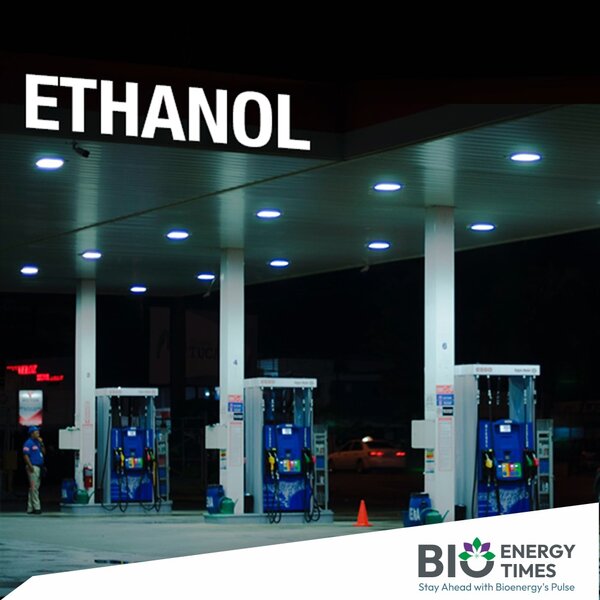
In the latest development, the Ministry of Road Transport and Highways has issued a draft notification proposing amendments to the Central Motor Vehicles Rules, 1989, to formally expand the definition of fuel to accommodate higher ethanol and biodiesel blends.
The draft proposes to include E85, a blend of 85% ethanol with petrol, and E100, or pure ethanol, within the vehicle fuel framework. Biodiesel classification has been proposed to be extended up to B100, or 100% biodiesel.

‘Delighted and a welcome move’ aptly summarises the reaction of the ethanol suppliers and distillers.
Arushi Jain, Joint Secretary, Grain Ethanol Manufacturers Association (GEMA), said that India’s push towards higher ethanol blending reflects a critical shift toward energy security.
She said, “Recent global conflicts and the resulting pressure on petroleum prices have reinforced the importance of self-reliance. OMCs have absorbed the cost of imported fuel without passing it on to consumers, but this approach is not sustainable indefinitely”.
Jain stated that ethanol offers a practical pathway forward. The move towards E85 and E100 is a welcome step by the government, with positive implications for the entire Indian economy.
Sachin Malusare, Director, Fuelbrains India Private Limited, said that the draft notification will help expedite the development of Flex-Fuel vehicles, paving the way for increased consumption of renewable fuels in the transport sector.
“This increase in consumption of renewable fuels shall not only help in the reduction of carbon footprint but also reduce the crude oil imports as well as increase the farmer incomes,” he said.
He further noted that actual consumption will largely depend on the cost of Flex-Fuel vehicles and the retail prices of biofuels for end consumers. Further, the GST on Flex-Fuel vehicles and ethanol (for users other than OMCs) needs to be lowered for faster adoption.