
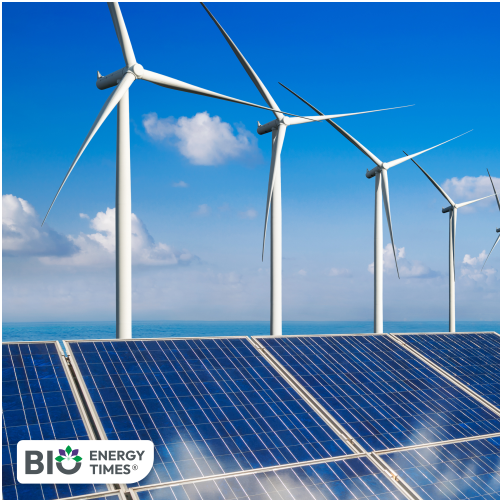
The metal industries across the globe have undergone a significant transformation. They were mainly dependent on the traditional sectors, which included construction, heavy machinery, and automation. As people become more mindful of their choices, we can see a transition towards renewable energy sources. More and more countries want to achieve their long-term sustainability goals, and they are now opting for cleaner sources of energy.
As solar energy is a preferred energy source, it is essential to gather the raw materials required to build its infrastructure. It has created a high demand for metals such as steel, aluminium, and copper, which are widely used in its construction and maintenance. The metal industry is now following practices which can help us move towards a cleaner ecosystem.

A Change In The Energy Landscape
Infrastructure development and industrial manufacturing were believed to be the cornerstones of the development of the metal industry. The consumption patterns have now changed with the growing demand for decarbonization. Renewable energy sources are now being prioritised by government officials, consumers, and various other global corporations. As a result, the demand for solar installations has witnessed a worldwide surge. This structural shift has led to solar energy becoming a mainstream solution for the new technological developments. It has been supported by policy incentives and has also led to decreased costs.
The metal industry has now been presented with various opportunities, and they are now trying to diversify their operations. There is a need to move towards a low-carbon economy which is conscious of its carbon footprint. Consequently, both manufacturers and consumers are becoming more mindful about their daily choices. All renewable practices are in line with a region’s long-term sustainability goals.
How Is The Solar Industry Dependent on Metals?
The building of solar energy systems requires a wide array of metals. Each metal plays a critical role in the coming together of various processes, which are essential to make the machinery work. Steel plays a crucial role in the building of mounting structures which can support these solar panels. These structures must be strong and durable as they are supposed to withstand harsh weather conditions.
Another important metal in the solar panels is aluminium. It is a lightweight metal which has anti-corrosive properties. As aluminium is a recyclable metal, it is a preferred choice for a wide number of manufacturers.
The most important metal which is required in these structures is copper. It is used extensively in electrical appliances and is used specifically in wiring, transmission systems, and inverters. It is known for its superior conductivity and can be used in efficient energy transmission. The growing need for a solar infrastructure has increased the popularity of copper in the current times.
How Is Solar Energy More Sustainable?
As we switch to solar appliances at a rapid pace, we must also understand that it will lead to significant innovation in the metal industry itself. There has been an effort by the producers to reduce the carbon footprint in their daily practices, and they are now heading towards an ecosystem which is aligned with the renewable energy goals.
Steel manufacturers want to stay in line with sustainable practices, and they are now making a shift towards green steel production. The aluminium industry is now employing renewable smelting operations, and the copper industry is focusing on recycling initiatives.
There has been a seamless coordination between the product use and the production methods. The infrastructure of the solar energy systems must be in line with the environmental standards. As a result, solar energy usage will help reduce the global emissions it will consequently create an ecosystem which can drive both innovation and sustainability.
Opportunities Offered By This Transition
As we move towards a solar infrastructure, we will also be presented with a significant number of opportunities for the metal industry. As renewable sources witness a significant investment, so does the subsequent demand for the metal industry. This has led to capacity expansion in key segments and also opened up new streams of revenue.
Solar installations have seen a rapid growth in the emerging markets. Countries are now looking forward to reducing their consumption of fossil fuels. They are now making full use of the abundant sunlight and heavily investing in solar power plants. The producers and suppliers have both benefited from the growing demand for metals. The transmission and distribution networks have both been upgraded with the integration of solar energy into the existing grids. This has resulted in a robust demand for metals.
Final Thoughts
The world is changing at a rapid pace, and the metal industry needs to make use of all the opportunities that are presented on the economic front. There has been a global energy transition with the introduction of solar energy, and the metal industry has played a pivotal role in this shift. To accelerate innovation and streamline the supply chains, there needs to be seamless coordination between the policymakers, metal producers and companies which are dealing with the metal industry at the forefront. Long-term sustainability can be ensured only when there is a significant investment in circular economy practices and recycling.
In this era, which is defined by solar energy, the demand for essential metals will continue to grow. To determine the success of the metal industry, we need to measure how efficiently it is employing sustainable practices.
By supporting the growth of solar infrastructure, we are moving towards a future which is more sustainable, and we are also diversifying the various growth avenues. Essential metals like steel, aluminium, and copper have become the building blocks of a greener energy landscape.