

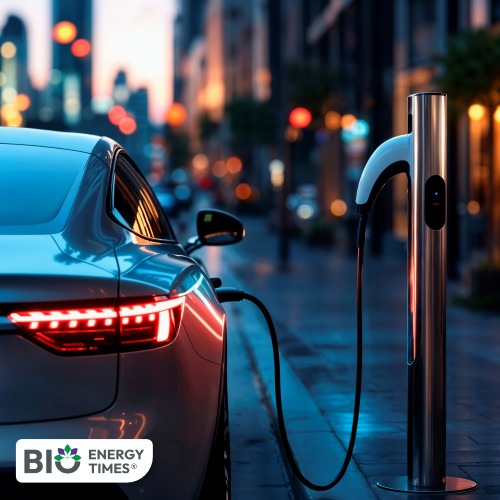
The cost of charging an electric vehicle (EV) on public networks in the United Kingdom has dropped below the per-mile cost of running a petrol or diesel car for the first time in more than a year, driven by a sharp rise in liquid fuel prices following escalating global conflict, industry body ChargeUK reported.
The finding is based on data from RAC Fuel Watch and the Zapmap Price Index. According to the analysis, drivers using a standard public charger at the national average rate of 54 pence per kilowatt-hour can expect to pay around 15 pence per mile, compared with 17 pence per mile for a typical petrol car and 17.5 pence for diesel. Drivers drawing on an 80/20 mix of standard and rapid public charging would pay around 16 pence per mile. Only those relying exclusively on ultra-rapid public chargers would still face a higher per-mile cost than liquid fuel.

ChargeUK noted that average public EV charging prices had risen 38 per cent between 2021 and 2025, largely driven by policy-related cost pressures including high standing charges. However, petrol and diesel prices have surged sharply in recent weeks in response to global conflict, while public charging costs have remained comparatively stable, narrowing and ultimately closing the gap.
The development coincides with separate Auto Trader data showing that new EVs have, for the first time, become cheaper to purchase on average than new petrol vehicles, once discounts and government grants are factored in.
ChargeUK Chief Executive Vicky Read said the cost crossover was not how the industry had hoped to see the gap close. She called on the government to address the structural policy issues underpinning high public charging costs so that the affordability advantage could be sustained beyond a period of global crisis. She said the cost pressures bearing on public EV charging are largely within the government’s control, whereas those pushing up petrol and diesel prices are not.
Ian Plummer, Chief Customer Officer at Auto Trader, said falling purchase prices and lower running costs together represent a key milestone in the UK’s EV transition, while cautioning that the government needs to do more to make public charging permanently affordable.
Melanie Shufflebotham, co-founder and Chief Operating Officer of Zapmap, noted that drivers with a typical 80/20 split between home and public charging are now seeing cost savings at their highest level since May 2024. She added, however, that the UK continues to have the highest public charging costs in Europe.
Simon Williams, Head of Policy at the RAC, attributed part of the problem to a 20 per cent value-added tax rate on public EV charging compared with 5 per cent for home charging, alongside high standing charges that are outside operators’ control. He said the government should act on these issues to support a broader shift toward electric driving. The UK Government committed in last November’s Budget to a review of public EV charging costs, which is currently underway.













