

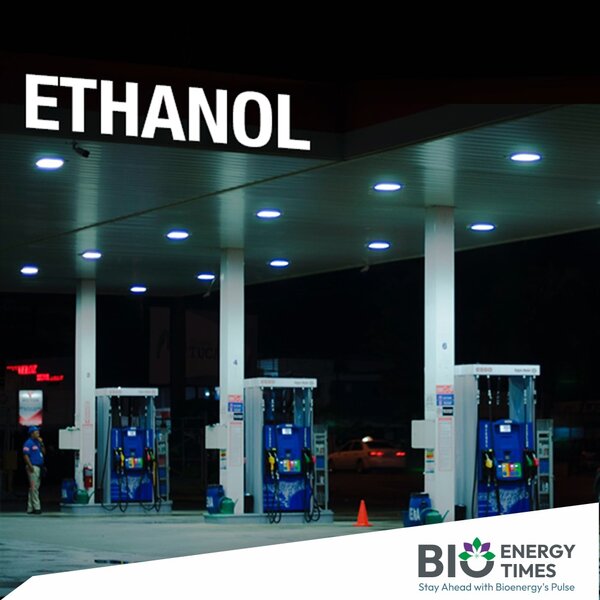
Jakarta: Indonesia has doubled its target for blending bioethanol into petrol to 20% by 2028 as the government steps up efforts to reduce dependence on fuel imports and strengthen domestic energy security, Bloomberg reported.
Coordinating Minister for Food Affairs Zulkifli Hasan said authorities are preparing around 2 million hectares of land across Java, Sumatra, Kalimantan and Papua for sugarcane cultivation. The plan was discussed at a meeting with President Prabowo Subianto in Jakarta on September 16.

Sovereign wealth fund Danantara will develop ethanol-processing facilities as part of the expansion of Indonesia’s biofuel programme.
The revised ethanol target marks a significant acceleration from Indonesia’s existing E5 programme, under which 5% bioethanol is blended into petrol. The country had earlier targeted E10 by 2028 but now plans to raise the blend to 20%, with a longer-term ambition of reaching E50.
The move follows Indonesia’s decision in July to raise the mandatory palm-based biodiesel blend to 50%, further expanding the country’s use of domestically produced biofuels.
Indonesia faces a major challenge in scaling up ethanol production to meet the higher blending target. Ethanol output is forecast at around 225 million litres in 2026, only about 15% higher than nearly a decade earlier, according to US Department of Agriculture data.
Sugarcane is expected to provide most of the additional feedstock. However, Indonesia remains heavily dependent on imported sugar, with sugar imports projected at 4.2 million tonnes in 2026-27 against domestic production of around 2.5 million tonnes, according to USDA estimates.
Hasan said sugarcane was identified as the most feasible feedstock after the government assessed alternatives including corn and cassava. The Agriculture Ministry will prepare a production strategy and secure land for cultivation, with land availability identified as the key bottleneck.
Indonesia has already begun efforts to expand sugarcane production. In July, the Agriculture Ministry announced plans with state-owned sugar producer Sinergi Gula Nusantara to replant 298,000 hectares of ageing sugarcane plantations, improve irrigation and upgrade sugar mills.
The government has also allocated 9 trillion rupiah (around US$507 million) to increase plantation productivity, including through the use of higher-yielding planting material.
Meanwhile, the Energy Ministry is preparing a roadmap to accelerate ethanol adoption. Eniya Listiani Dewi, director-general of new and renewable energy, said at an industry conference in Bali on September 17 that road tests of higher ethanol blends are planned for December and that the government is encouraging investment in ethanol production capacity.
The government’s longer-term plan is to progressively increase ethanol blending, potentially reaching E50, following the approach adopted for biodiesel. The expansion is part of Indonesia’s broader strategy to reduce fuel import dependence while increasing domestic agricultural and biofuel production.