New Delhi: India’s demand for electric vehicle (EV) batteries is expected to increase sharply over the next decade, rising from 20 GWh in 2025 to 200 GWh by 2032, according to the India Energy Storage Alliance (IESA), PTI reported.
The projection is part of a study prepared by IESA in collaboration with Customized Energy Solutions, which will be released at the India Energy Storage Week scheduled from July 8 to 10 in New Delhi.

The report highlights that India’s EV sector is moving beyond a policy-led phase and is evolving into a broader industrial ecosystem. This includes batteries, motors, power electronics, advanced battery chemistries, and stronger domestic supply chains.
IESA said the next phase of growth will be driven by localisation of components and development of a robust supply chain, positioning India as a potential global manufacturing hub.
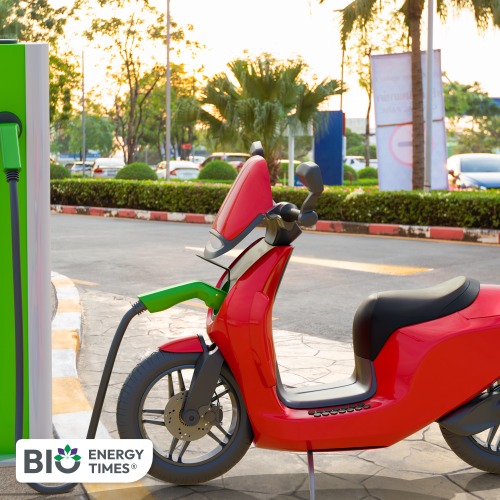
According to the study, EV sales in India crossed 2.5 million units in 2025, led by two-wheelers at 1.5 million units and three-wheelers at 0.7 million units. While these segments currently dominate, future growth is expected to come from electric passenger cars and light commercial vehicles.
IESA President Debmalya Sen said the industry is entering a phase of rapid expansion, with battery demand expected to rise significantly over the coming years.
The report also points to ongoing changes in battery technology. Nickel Manganese Cobalt (NMC) batteries currently account for about 70% of the electric two-wheeler segment, while Lithium Iron Phosphate (LFP) batteries are gaining share in other vehicle categories. Emerging technologies such as LMFP, solid-state and sodium-ion batteries are also being explored.
In motor technology, brushless direct current (BLDC) motors dominate the two-wheeler segment, while permanent magnet synchronous motors (PMSM) are widely used in electric passenger vehicles.
Officials said the findings indicate that India’s EV market is approaching a turning point, with strong growth expected across manufacturing, technology and supply chain segments in the coming years.