
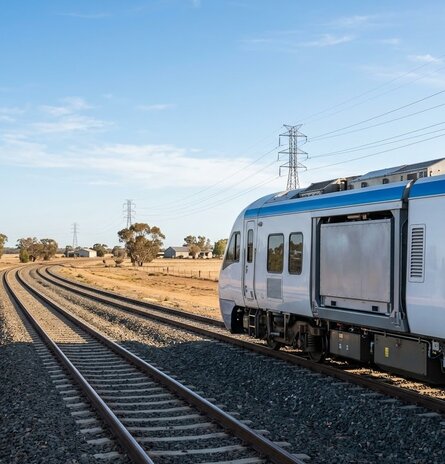
New Delhi: India is set to introduce its first daily hydrogen-powered train service after the Ministry of Railways approved operations on the Jind-Sonipat section in Haryana, marking a significant milestone in the country’s push towards cleaner and greener rail transport, ANI reported.
According to official sources, the train will operate as services 74010 and 74009, with commercial halts at Jind City, Pandu Pindara, Lalit Khera, Bhambeva, Ishapur Kheri, Butana, Khandrai, Gohana, Rabhra, Lath, Mohana, Haryana and Barwasni.

The approval comes after a successful trial run conducted in June between Delhi and Jind. The trial assessed key operational and safety parameters, including emergency braking distance and train oscillation, before clearing the train for commercial deployment.
Indian Railways had in May approved the introduction of a 10-coach hydrogen fuel cell-powered trainset on the Jind-Sonipat route under Northern Railway. The Ministry of Railways said the train is ready for launch and will be powered by a 1,200-kW hydrogen fuel cell propulsion system, enabling it to operate at a maximum speed of 75 kmph.
The hydrogen train is part of Indian Railways’ efforts to reduce carbon emissions and adopt cleaner energy technologies. Unlike conventional diesel-powered trains, hydrogen fuel cell technology generates electricity through a chemical reaction between hydrogen and oxygen, emitting only water vapour as a by-product.
With the launch of the pilot service, India joins a growing list of countries, including Germany, Japan, China and the United States, that are testing or operating hydrogen-powered trains as part of their low-carbon transport strategies.
To support the project, an indigenous hydrogen storage and refuelling facility has been established at Jind. The Petroleum and Explosives Safety Organisation (PESO) has granted the licence required for storing and dispensing compressed hydrogen at the site.
The railways has also installed a hydrogen compression system for refuelling operations and arranged technical support, critical spare parts and a standby compressor to ensure uninterrupted service.
Safety infrastructure at the hydrogen production, storage and dispensing facility includes hydrogen leak detectors and flame detectors, which will undergo regular inspection and maintenance. Indian Railways has also finalised operation and maintenance manuals for the trainset and hydrogen plant, while the Research Designs and Standards Organisation (RDSO) has approved safety protocols, audits and standard operating procedures for the maintenance facility at Shakurbasti.