

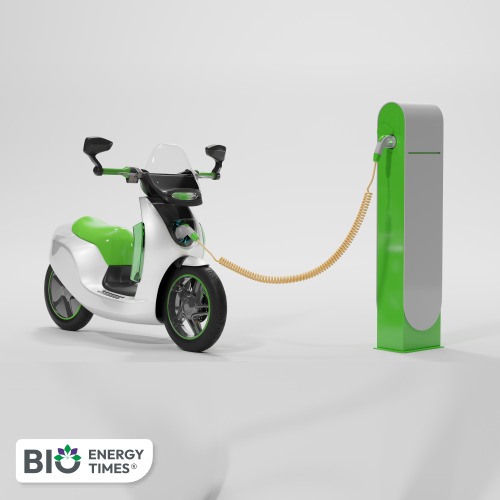
Bengaluru: India’s EV charging ecosystem is evolving along two distinct tracks, two-wheelers dominate charging activity, while four-wheelers account for most of the energy consumed. Bolt.Earth’s State of Charge: Exclusive EV Data Report 2026, released on World EV Day, highlights how this divergence is reshaping infrastructure needs and signalling a fast-diversifying, energy-intensive EV ecosystem. The data across six major metros shows that two-wheelers accounted for 78.1% of charging sessions in FY26-27 YTD, up from 71.6% in FY24-25. In contrast, four-wheelers accounted for just 16% of sessions but contributed 67.3% of energy consumed, up from 58.1%. This contrast highlights the need for infrastructure designed for both scale and energy intensity, according to a press release.
The report is based on Bolt.Earth’s internal network telemetry and operational data across six metro markets: Bengaluru, Hyderabad, Chennai, Delhi-NCR, Mumbai and Kochi, spanning FY24-25, FY25-26 and FY26-27 year-to-date.

Commenting on the report’s findings, Nithin TS, Head of Marketing, Bolt.Earth said, “
Other key findings from the report:
· Metros diverge, Tier-2/3 cities surge: Bengaluru remains the largest market (190,954 sessions, 526,990 kWh); Hyderabad and Kochi lead metro growth; Delhi-NCR and Mumbai show underutilization; and emerging tier 2/3 cities, led by Vijayawada, Rajamahendravaram and Thiruvananthapuram, are where demand is accelerating fastest. Together, these markets point to an EV-charging footprint that is expanding rapidly beyond the country’s largest urban centres.
· Two distinct daily peaks: Session volume peaks at 6PM, driven largely by two-wheelers, but energy demand peaks later, at 9PM, highlighting how peak hour load does not align with peak hour sessions, with direct implications for tariff design and grid planning.
· Fast charging wins on convenience, not loyalty: Fast charging is increasingly changing how people are approaching a charging visit, but it does not automatically create stronger long-term loyalty; rather, it remains a specialized layer of the network. DC fast charging cuts four-wheeler session length to 26.5 minutes versus 194.3 minutes on AC, but AC users return within 90 days at a higher rate. While DC fast charging addresses immediate needs, AC charging continues to sustain engagement.
· Measurable climate dividend: Modelled estimates based on delivered energy and vehicle-type data suggest six-metro charging activity alone avoided roughly 473 tonnes of net CO₂ emissions in FY25-26, with cumulative avoided emissions across all reporting windows estimated at over 1,100 tonnes, a reminder that every session, however small, adds up at network scale.
The report identifies five imperatives for the next phase of India’s EV transition: growing beyond metro-only models to capture Tier-2 and Tier-3 demand, building networks that stay broadly accessible for two-wheelers while carrying enough capacity for four-wheelers, planning around energy peaks rather than session counts, treating fast charging as a convenience layer rather than a loyalty driver, and designing differently for occasional versus high-frequency users.
“By 2030, the competitive advantage won’t simply belong to networks with the largest number of chargers. It will belong to networks that can place the right charger in the right market, provide the right charging speed for the right use case, maintain availability at peak demand, and manage electricity consumption around actual user behavior,” Nithin added.













