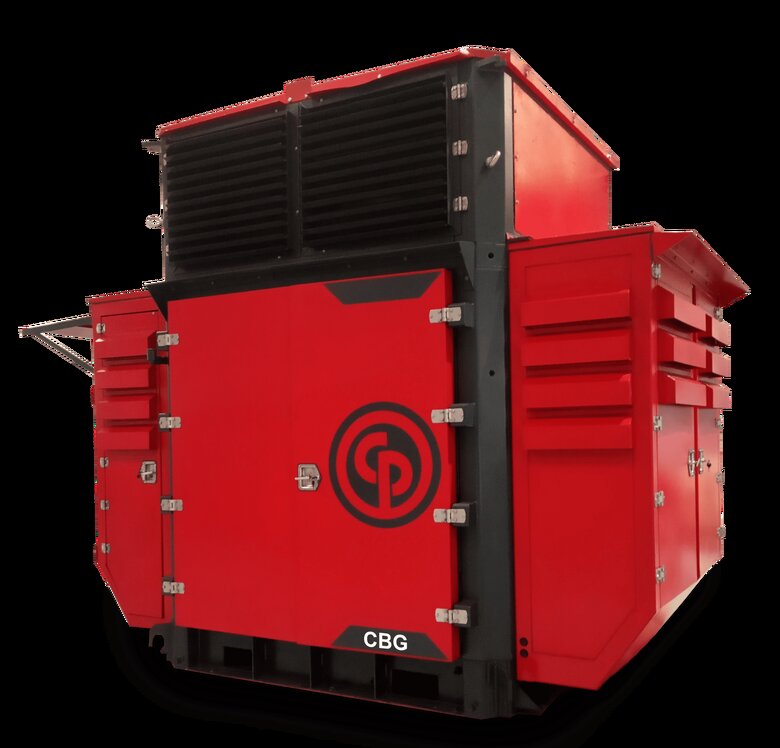
For decades, sugar mills have been key components of agro-industrial economies—centering mainly on the issue of maximum output during crushing seasons. Today, however, the discourse around them is changing. Apart from sugar processing, mills are trying to explore ways through which they could operate more efficiently, reduce costs on energy consumption, and optimize the usage of resources at their disposal.
One of such areas that has started to gain some traction recently is biogas utilization. As a byproduct of the industrial process, biogas has enormous potential to be utilized as a reliable energy resource. The problem with realizing this potential is, however, not only in the generation of biogas but also in its efficient management and application. In other words, the key to efficient utilization of biogas is its compression.

The fact is that in most industrial facilities biogas is generated at low pressure and variable volume. Without any doubt, this makes it hard to utilize effectively. Compression of biogas is what enables its efficient utilization through providing constant flow and the possibility of storing and integrating it into the system of energy consumption. This becomes all the more relevant in light of the properties of the gas. Biogas is not necessarily pure and free of contaminants; it may contain moisture and other elements. Such aspects pose certain challenges to the machinery, which must be managed accordingly. Modern compression technology is thus equipped to work with these variables by means of durable materials and efficient sealing.
As crucial as it is to be able to handle certain conditions, it is also imperative to adapt to changing situations. There are times when production of the gas is high, and times when it drops. In order to account for these dynamics, it would make sense to opt for a system with variable speeds. This way, it will not operate at a constant output but will match actual demand.
In addition to the compression, the quality of gas is a crucial factor in terms of recovering energy. The presence of moisture and impurities that remain untreated may not only impact the efficiency of the process but may also lead to decreased reliability of downstream processes. Here comes into play the importance of filtration and drying technologies that ensure the proper conditions and prevent any negative impact. Speaking about energy efficiency, it is obvious that the key principle of choosing equipment is its high efficiency. In terms of modern technological developments, compression becomes a necessary technology but should not become the source of additional expenses in terms of increased energy consumption. The modern generation of such equipment focuses on the efficient use of energy resources with minimum energy consumption.
One more significant change in the process is the presence of control and visibility options. It means that operators are not only interested in the functioning of compressors but also want to get additional information about their performance and control parameters. It is possible to say that such an option is becoming an integral part of modern technological solutions.
Naturally, reliability is still unavoidable. Frequent disruptions are too costly for sugar mills, particularly during periods of high production. Because of this, compression systems are being developed with durability and simplicity in mind, including longer service intervals, better access to maintenance, and components made for prolonged industrial usage. Maintaining operations with the least amount of disturbance is the clear objective. This environment is further strengthened by the support system surrounding the equipment. Over time, the performance of systems is greatly impacted by having access to genuine parts, technical know-how, and prompt service. Sustaining performance year after year is more important to industrial operators than installation alone.
A change in perspective is taking place on a larger scale. By-products are no longer considered secondary by sugar mills; instead, they are starting to be viewed as opportunities. Making such a transition feasible depends heavily on effective gas management and compression. Energy recovery becomes dependable, scalable, and economically significant when done correctly. In many respects, this is a logical progression for the sector. The emphasis is shifting from production to efficiency, dependability, and sustainability in addition to productivity. Biogas fits easily into this transition when it is supported by the appropriate compression and treatment systems.
As mills continue to modernize, solutions that are useful, flexible, and designed for actual conditions will become more and more important. Not only are advanced compression technologies making energy recovery possible, but they are also changing the way industrial operations see long-term resilience, value, and efficiency.