

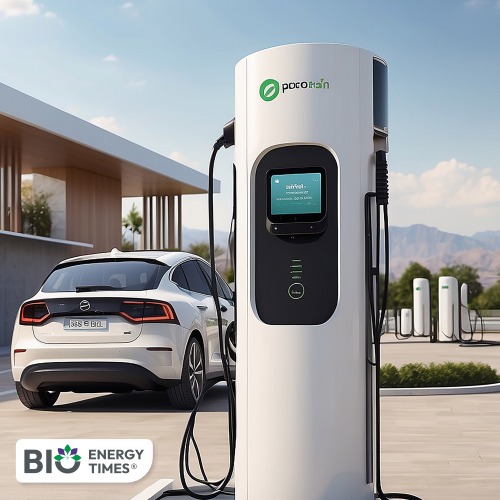
Global sales of battery electric vehicles (BEVs) and plug-in hybrid electric vehicles (PHEVs) are projected to reach 35.4 million units by 2030, up from 21 million in 2025, creating fresh demand for aluminium across the automotive supply chain, according to a report by AL Circle.
Sales are forecast to rise 11% to 23.3 million units in 2026, followed by 26.1 million in 2027, 29.2 million in 2028 and 32.2 million in 2029. By 2026, EVs are expected to account for 27% of global passenger-vehicle sales, compared with less than 5% in 2020.

The expansion of electric mobility is increasing the use of aluminium in battery enclosures, electric-drive housings, vehicle bodies and structural components. Research by Ducker Carlisle cited in the report projects an additional 53.7 kg of EV-specific aluminium per vehicle between 2022 and 2030. Electric-drive housings are expected to account for the largest increase at 22.7 kg, followed by battery enclosures at 11.8 kg and large and mega castings at 8.4 kg.
Regional trends, however, vary. In North America, aluminium content in BEVs is forecast to reach 404 kg per vehicle by 2030, up from 365 kg in 2022. In China, average aluminium use across passenger vehicles is projected to increase from 187.1 kg per vehicle in 2025 to 242.2 kg by 2030.
Europe is expected to see a different trend in aluminium content per BEV. The figure, estimated at 310 kg in 2025, is projected to decline to 275 kg by 2030. Nevertheless, BEVs contained 283 kg of aluminium per vehicle in 2022, around 67.5% more than the 169 kg used in conventional internal combustion engine cars.
Aluminium is used in EVs because of its relatively low weight, structural strength and thermal conductivity. Its applications include battery frames, cooling plates, protective structures, motor and drivetrain housings, body panels and other vehicle components. The report notes that the extent of its use will also depend on vehicle design, material selection and manufacturing requirements.