
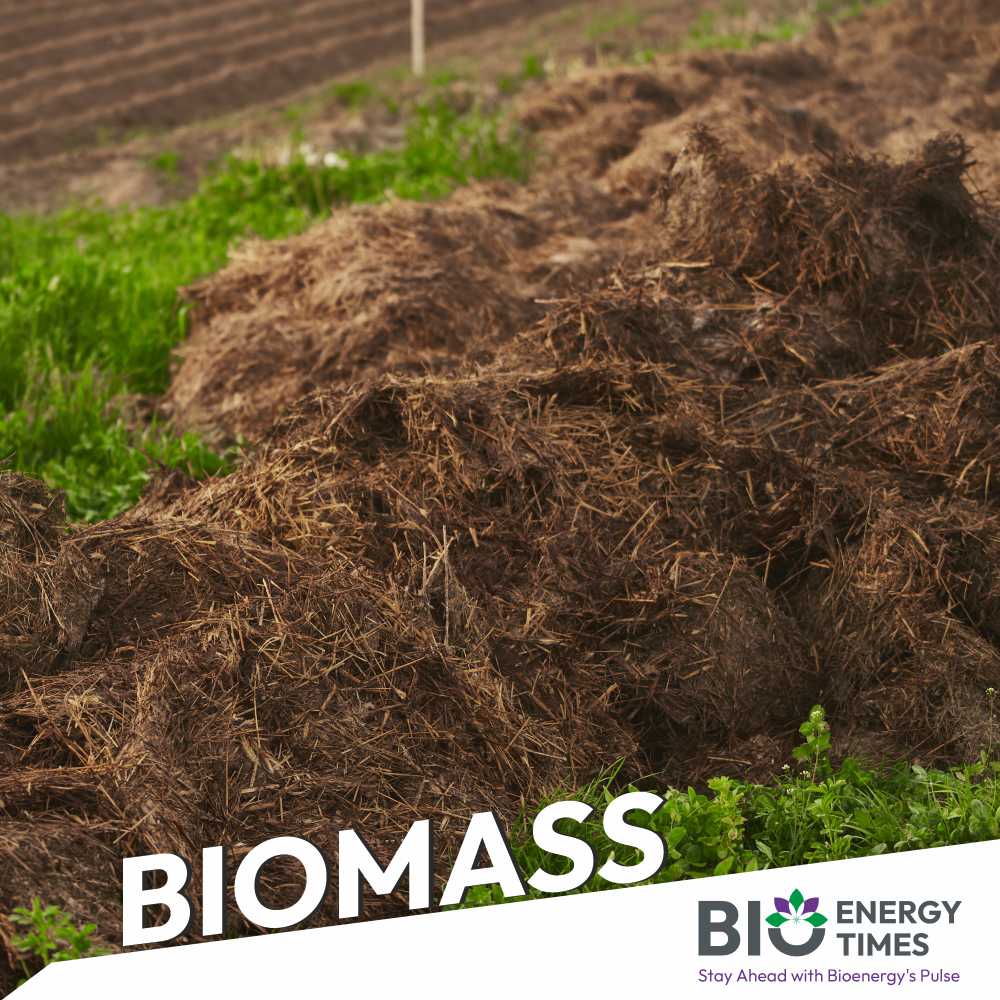
IBADAN, Nigeria: Biomass from oil palm processing waste could become a more efficient source of renewable energy with the help of an artificial intelligence-based framework developed by Nigerian researchers to optimise biogas production, Nigerian Tribune reported.
The study, published in Biomass Conversion and Biorefinery, examined the conversion of oil palm empty fruit bunches (OPEFB) into methane-rich biogas through anaerobic digestion. The researchers combined laboratory experiments with machine learning, explainable AI and optimisation techniques to identify conditions that could maximise methane yields.

OPEFB is one of the major biomass residues generated by the palm oil industry. Large quantities are often burned or discarded, creating environmental concerns and leaving significant bioenergy potential unused.
The research team, led by Dr Idowu Olugbenga Adewumi of the Federal College of Agriculture, Ibadan, evaluated temperature, pH, organic loading rate, hydraulic retention time and carbon-to-nitrogen ratio during laboratory-scale digestion trials.
The experiments generated 5,452 observations between January and November 2025. Methane yields ranged from 181.44 to 282.42 mL CH₄/g VS, with an average of 231.89 ± 15.22 mL CH₄/g VS.
The AI analysis identified temperature as the strongest factor influencing methane production, followed by cellulose content. Researchers said higher temperatures can improve microbial activity and accelerate the breakdown of biomass.
Five predictive models were evaluated, including Multiple Linear Regression, Artificial Neural Network, Random Forest, Support Vector Regression and Gradient Boosting Regression. Multiple Linear Regression delivered the strongest predictive performance, with an R² of 0.5513.
Evolutionary optimisation using Genetic Algorithm and Particle Swarm Optimisation then identified conditions for maximum methane production.
The optimum conditions were predicted at a temperature of 54.87°C, pH 7.18, organic loading rate of 3.62 g VS/L/day, hydraulic retention time of 28.41 days and carbon-to-nitrogen ratio of 27.83.
Under these conditions, the model predicted methane production of 281.84 mL CH₄/g VS.
The researchers said the findings demonstrate the potential of combining AI with biomass conversion technologies to improve renewable energy production while reducing agricultural waste and supporting a circular bioeconomy.