
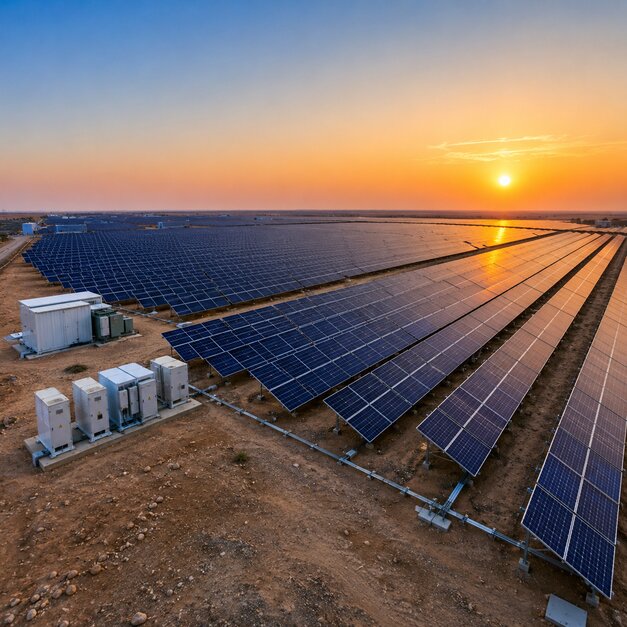
India’s solar module manufacturing capacity has increased nearly 15 times, from around 8 GW to nearly 116 GW, with projects supported by the Production Linked Incentive (PLI) scheme contributing about 24 GW, according to a NITI Aayog report, ANI reported.
The report said PLI-supported projects account for around 20.7% of the country’s total solar photovoltaic (PV) module manufacturing capacity, reflecting the scheme’s contribution to expanding domestic production.

The High Efficiency Solar PV Modules PLI scheme has an allocation of Rs 24,000 crore. It aims to increase domestic manufacturing, promote the use of advanced technology and reduce dependence on imported solar modules. Total investment under the scheme stood at Rs 64,873 crore by March 2026.
The increase in domestic manufacturing has been accompanied by a fall in imports and growth in exports. Imports of solar PV modules declined from around USD 4.35 billion in 2023-24 to USD 2.15 billion in 2024-25.
India’s solar module exports increased from USD 83 million in 2021-22 to USD 1.97 billion in 2023-24. They remained relatively strong at around USD 1.12 billion in 2024-25, the report said.
The scheme has also encouraged manufacturers to source more materials and components from within the country. Incentives are linked to the extent of domestic content used in production, with the aim of building a stronger and more connected solar manufacturing industry.
The report said the scheme had delivered encouraging initial results in attracting investment, increasing manufacturing capacity, reducing imports and expanding exports.
However, it noted that the impact on employment and production was still developing, as several manufacturing units were gradually increasing their output.
The assessment also highlighted challenges from falling global solar module prices, partly due to excess manufacturing capacity and aggressive pricing by Chinese manufacturers. Limited availability of some important materials and China’s continued dominance in the global solar supply chain were other concerns.
According to the report, the scheme’s long-term success will depend on manufacturers increasing the use of domestically sourced materials, keeping production costs competitive, expanding their capabilities across the solar manufacturing chain and maintaining export growth amid changing global market conditions, ANI stated.