

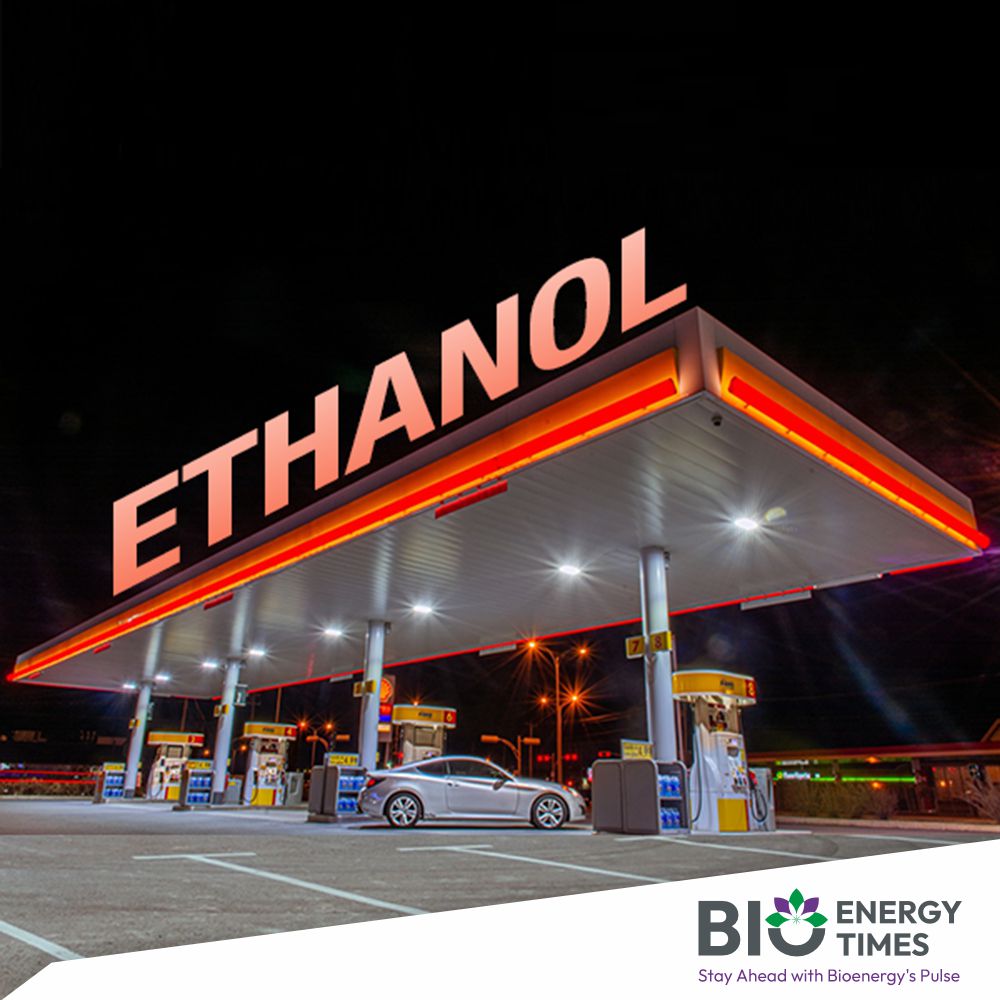
Union Petroleum and Natural Gas Minister Hardeep Singh Puri on Tuesday said the government has no immediate plans to raise ethanol blending in petrol beyond the existing 20% target, while dismissing concerns over E20 fuel as a manufactured narrative, The Hindu Businessline reported.
Speaking on the sidelines of the inauguration of the 29th Energy Technology and Innovation Meet in South Goa, Puri said the Centre was not considering a higher blending target at present. He also alleged that misleading claims about E20 petrol were creating unnecessary apprehension.

The government had set a 20% ethanol blending target, and there was currently no proposal to go beyond that level, the minister said in response to a question on the debate surrounding E20 fuel.
India has already introduced petrol containing 20% ethanol and 80% conventional fuel as part of its efforts to reduce dependence on crude oil imports. The import bill for crude oil is a major factor affecting the country’s current account deficit.
Puri referred to social media claims that vehicles were breaking down because of E20 petrol, saying such reports had contributed to the spread of misinformation. He maintained that vehicles designed to comply with the E20 standard were suitable for the blended fuel, while some older models, particularly those manufactured before 2003, had experienced compatibility issues.
The minister also attributed some reported problems to the transportation of blended fuel, suggesting that tankers used to carry ethanol-blended petrol had previously been deployed to transport other products.
On allegations of engine damage, Puri said a claim made against a particular automobile manufacturer had led to legal action by the company. He argued that widespread engine damage would have been evident given the large number of vehicles using fuel dispensing stations across the country.
Puri said the introduction of E20 petrol had helped the government save around ₹1.6 lakh crore, of which approximately ₹1.4 lakh crore had gone to farmers. He said the programme had also expanded the role of farmers in the energy economy, turning them from food providers into contributors to the country’s energy supply.
The three-day Energy Technology and Innovation Meet, organised by the Union Ministry of Petroleum and Natural Gas, is being held at Betul village in South Goa. This year’s theme is ‘Accelerating Energy Innovation From Research to Commercialisation’.
Meanwhile, the Ministry of Road Transport and Highways on Monday notified amendments to the Central Motor Vehicles Rules, 1989, recognising flex-fuel vehicles capable of operating on ethanol blends of up to E100.
Unlike conventional petrol vehicles, which are approved for lower ethanol blends, flex-fuel vehicles are designed to run on higher concentrations, including E85, comprising 85% ethanol, and E100, which is nearly pure ethanol.
Automakers such as Toyota Motor Corporation, Tata Motors and Hyundai Motor Company are developing flex-fuel models for the Indian market as the government continues to pursue measures to reduce the country’s dependence on imported fossil fuels.