
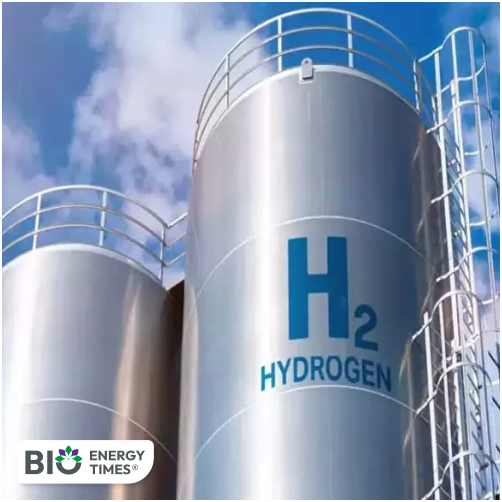
Germany’s latest hydrogen policy package falls short of providing the investment certainty needed to accelerate the sector’s development, despite being a step in the right direction, reported Quantum Commodity Intelligence, citing the German energy industry association BDEW.
The Federal Ministry for Economic Affairs and Energy (BMWE) announced a ten-point hydrogen action plan earlier this week, along with a dedicated funding window of 1.5 billion euros ($1.7 billion) under its Carbon Contracts for Difference (CCfD) programme.

BDEW chair Kerstin Andreae welcomed the government’s focus on coordinating measures across the hydrogen value chain but said the proposed steps lacked the scale needed to drive wider production and consumption. She stressed that bringing down hydrogen costs would require a substantial increase in both output and demand.
The association called for a separate hydrogen Contracts for Difference (CfD) mechanism covering production, procurement and trading. It also sought dedicated funding from 2027 to support long-term hydrogen supply contracts and improve investment visibility.
BDEW further urged the government to provide greater clarity on the development of hydrogen networks and storage infrastructure, introduce stronger incentives for converting power plants to hydrogen and accelerate domestic production.
At the European level, the association supported efforts to simplify the EU’s rules governing renewable fuels of non-biological origin (RFNBOs). It also called for closer coordination among member states through a European hydrogen alliance.
The concerns come amid a slow rollout of Germany’s hydrogen projects. According to Quantum Commodity Intelligence, only 44 of the 169 projects it tracked were operational as of September.
Germany’s target of installing 10 GW of electrolysis capacity by 2030 is also becoming increasingly difficult to achieve. While the government’s latest package signals continued policy support, questions remain over whether the proposed measures will be sufficient to attract the investment required for hydrogen production and infrastructure.