

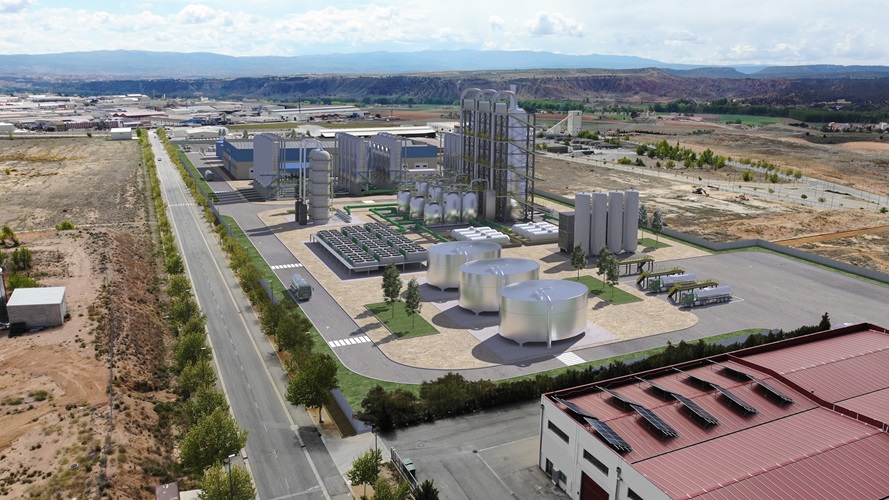
Morocco is planning to establish a $239 million biofuel facility to produce sustainable aviation fuel (SAF) from used cooking oils, animal fats and vegetable oil processing by-products, marking a push to expand its renewable fuel production capacity, UkrAgroConsult reported.
The project, being developed by Green Sky Capital, will be located in the Betoya Industrial and Logistics Zone within the Nador West Med port complex in northeastern Morocco. Once operational, the facility could become one of the country’s first large-scale commercial production units for sustainable aviation fuel.

The proposed plant will have an annual production capacity of 176,000-200,000 tonnes of SAF and will also manufacture renewable diesel, renewable naphtha and small quantities of biopropane. Its operations will require approximately 200,000 tonnes of feedstock annually, including used cooking oils, animal fats, food processing waste and by-products from vegetable oil refining.
The project will use Hydroprocessed Esters and Fatty Acids (HEFA) technology developed by Axens, which converts lipid-based feedstocks into renewable transport fuels. The technology will enable the processing of waste oils and fats into lower-carbon alternatives to conventional fossil-based aviation and road fuels.
The feedstock will be sourced from both domestic and international markets. While a portion will be collected within Morocco, the facility will also depend on imports of used vegetable oils and soapstock-derived acid oils. Imported raw materials will be received through Nador West Med port, while domestic supplies will be transported by road.
The European Bank for Reconstruction and Development (EBRD) is evaluating a financing package of up to $105 million for the project. This includes an $85 million committed loan tranche and an additional $20 million tranche that has not yet been committed. A further financing contribution of up to $20 million through the Green Climate Fund is also under consideration.
Construction and commissioning preparations are expected to take approximately 22 months, with commercial production tentatively scheduled to begin in August 2028.
The project is expected to create additional demand for used cooking oils, animal fats and by-products of vegetable oil processing, which are increasingly being used as feedstocks for advanced biofuels. Its reliance on imported waste oils could also open up new international trading opportunities for suppliers of these materials.
However, the project’s ability to achieve its proposed production capacity will depend on securing financing, completing construction and establishing reliable domestic and international feedstock supply chains.