

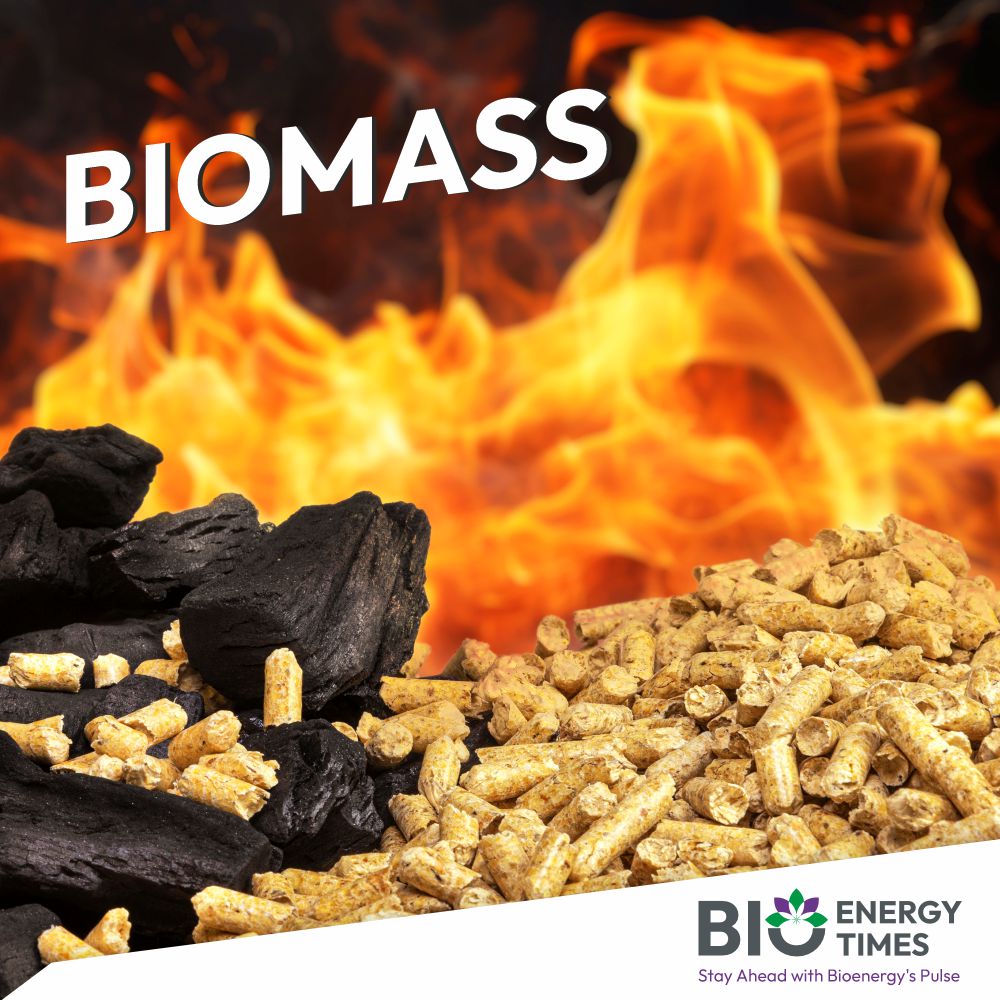
A forestry audit by Bioeconomy Science Institute scientist Peter Hall has found that New Zealand has enough forest biomass to eliminate its dependence on coal as an energy source, with the Bay of Plenty region alone capable of supplying a significant share of the country’s additional bioenergy needs, Farmers Weekly reported.
Speaking at a BECA-sponsored energy symposium in Tauranga, Hall said wood biomass currently contributes about 46 petajoules (PJ) of New Zealand’s annual energy demand of 835PJ, mainly through wood pellets and wood chips used in biomass-fired energy systems.

According to Hall’s assessment, the country has the potential to generate at least another 60PJ of energy annually from wood biomass, with the Bay of Plenty region able to contribute around 23PJ.
He said New Zealand continues to export large volumes of logs at relatively low prices, even though the same resource could be used domestically to generate energy.
“We have logs selling to China at around NZ$74 a tonne at a loss, while there are many opportunities to use them here in the Bay of Plenty,” Hall said.
New Zealand harvests about 32 million tonnes of timber each year, of which around 20 million tonnes are exported, mostly as logs through the Port of Tauranga.
Hall said the domestic energy sector could absorb all of this timber and even more, describing energy demand as a major opportunity for the forestry industry.
He added that future biomass supply is secure because of continued forest planting over many years, ensuring a steady pipeline of trees for harvesting while younger forests continue to absorb carbon dioxide.
New Zealand currently has about 1.818 million hectares of exotic forests, according to the latest national forestry survey, matching the area recorded in the late 1990s.
Hall said wood biomass offers several advantages over other renewable energy sources because it can provide heat and steam, electricity and liquid transport fuels. It also stores carbon, can be regenerated, is available year-round and offers a reliable long-term energy supply.
Unlike solar and wind power, wood biomass is not affected by seasonal or weather-related variations, making it suitable for providing stable electricity generation.
He noted that wood used for heat generation has an energy conversion efficiency of about 82.5%, only slightly below coal’s efficiency of 85%.
Hall’s estimate for the Bay of Plenty includes not only harvested timber but also forest residues, thinning material and shelterbelt trimmings. He said up to half of every harvested tree can become forest or sawmill residue suitable for bioenergy production.
Wood fuel can be processed into a range of products, including wood chips and high-energy torrefied pellets with low moisture content.
The Waikato-Bay of Plenty region already has several industrial facilities powered by wood fuel. These include Affco’s Horotiu plant, which operates an automated wood pellet facility, and Fonterra’s wood-fired boiler plants at Hautapu and Te Awamutu.
Energy Efficiency and Conservation Authority (EECA) regional manager Aden Jones said around 140 wood energy projects are currently operating across New Zealand.
“There is enough biomass available. The challenge is improving the supply chain so that the resource reaches the industries that need it,” Jones said.