
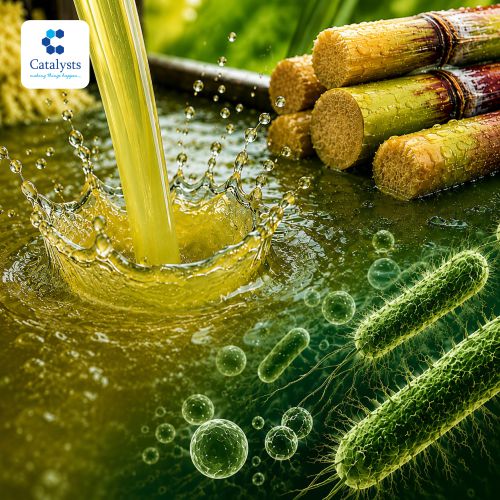
Sugarcane processing is a race against time. Once cane is harvested, its juice becomes a nutrient-rich medium for rapid microbial growth. If left uncontrolled, bacteria such as Leuconostoc mesenteroides and Lactobacillus spp. produce dextran, lactic acid, and other unwanted byproducts that increase viscosity, reduce juice clarity and sugar recovery, and negatively impact ethanol yields.
Antimicrobials and biocides are therefore essential in modern sugar mills and distilleries. By controlling microbial activity at an early stage, they help maintain process efficiency, maximize recovery, and improve profitability.
Microbial contamination is a global challenge, particularly in tropical countries such as India, Brazil, and Thailand, where warm, humid conditions accelerate cane deterioration. Even short delays in crushing can significantly increase microbial activity, making timely intervention critical.

Below, we break down how three specialized solutions — Bactosafe DF, Bactoshield, and Bactoferm — tackle microbial challenges at different stages of sugarcane processing.
Antimicrobials vs. Biocides
Before exploring the solutions, it’s important to understand the difference:
• Antimicrobials control microbial activity within cane juice or fermentation media, preventing bacteria from consuming sugars and producing harmful acids or dextran.
• Biocides provide broader protection by preventing microbial growth on equipment surfaces, pipelines, evaporators, and storage tanks, reducing slime, scaling, and energy losses.
Together, they protect juice quality, equipment performance, and fermentation efficiency. While antimicrobials act within the process to preserve sucrose, biocides protect the processing environment, helping reduce steam consumption, chemical usage, and unplanned cleaning shutdowns.
Understanding the Science: Why Microbial Control Matters
Microbial contamination often goes unnoticed until it begins affecting sugar recovery and ethanol production. The resulting biochemical reactions can significantly impact plant performance:
• Dextran Formation: Leuconostoc mesenteroides converts sucrose into dextran, increasing juice viscosity, reducing clarification efficiency, and lowering sugar recovery.
• Acid Production: Lactobacillus spp. and related bacteria produce lactic and acetic acids, lowering pH, affecting crystallization, and reducing fermentation efficiency.
• Slime & Scaling: Biofilm formation on pipelines, evaporators, and storage tanks reduces heat transfer efficiency, causes scaling, and increases cleaning frequency.
• Fermentation Competition: In distilleries, bacteria compete with yeast for fermentable sugars, reducing ethanol yield and increasing dependence on antibiotics.
In numbers, the problem becomes even clearer:
• Every 1000 ppm of dextran can cause a 3–4 kg sugar loss per ton of cane.
• A 1% rise in bacterial contamination can reduce ethanol yield by 5–7%.
• Microbial scaling in evaporators can increase steam consumption by 10% or more, directly raising energy costs.
BACTOSAFE DF – CONTROLLING BACTERIAL LOAD AT THE SOURCE
Freshly harvested cane begins deteriorating almost immediately. Within 30–40 minutes, bacterial load doubles if left unchecked. Leuconostoc mesenteroides, in particular, is notorious for converting sucrose into dextran, increasing viscosity and complicating processing. Even a 1000 ppm increase in dextran can reduce sugar recovery by 3–4 kg/ton of cane. Mills without effective bacterial control often face 10–15% higher chemical consumption during clarification.
How Bactosafe DF addresses this:
• Rapidly suppresses Leuconostoc mesenteroides and related microbes.
• Maintains low juice viscosity for smooth pumping.
• Reduces sucrose losses in molasses.
• Cuts down on lime and flocculant usage.
• Improves throughput and mill efficiency.

Mechanism of Action
Bactosafe DF works by penetrating bacterial cell walls and disrupting essential metabolic processes such as carbohydrate fermentation and polysaccharide production. By halting dextran formation at the microbial level, it preserves sucrose integrity and ensures stable juice quality right from the start.
Why It Stands Out
Plant trials show Bactosafe DF can reduce bacterial counts by 80–90% in the first stage of processing — directly translating into higher sugar recovery and lower operational costs.
BACTOSHIELD – LONG-LASTING BIOCIDE FOR PROCESS PROTECTION
Bactoshield is a specialized biocide formulated to protect equipment surfaces, evaporators, pipelines, and storage tanks from microbial scaling, fouling, and slime formation. Unlike antimicrobials that act mainly on juice, Bactoshield defends the processing environment itself.
How Bactoshield addresses this:
• Prevents slime buildup in pipelines and evaporators.
• Inhibits biofilm formation, protecting equipment life.
• Enhances heat transfer efficiency, lowering steam demand.
• Reduces unplanned shutdowns and cleaning needs.

Mechanism of Action
Bactoshield acts by creating a controlled-release biocidal environment on equipment surfaces. Its active molecules penetrate microbial biofilms, disrupting cell membranes and halting colony formation. Unlike short-lived treatments, it provides sustained protection that minimizes recurring contamination.
Why It Stands Out
Bactoshield provides long-lasting protection with controlled-release action. Mills using Bactoshield report up to 15% lower energy consumption and 25–30% fewer stoppages for cleaning.
BACTOFERM – SAFEGUARDING FERMENTATION EFFICIENCY
Bactoferm is a specialized antimicrobial solution designed for distilleries and ethanol plants. It ensures that yeast fermentation proceeds smoothly by controlling competing bacterial growth.
How Bactoferm addresses this:
• Selectively inhibits bacterial contaminants without harming yeast.
• Stabilizes fermenter pH by lowering acidity.
• Reduces sugar wastage to acids, channeling more into ethanol.
• Supports yeast health, ensuring consistent ethanol yields.

Mechanism of Action
Bactoferm works through selective inhibition. Its antimicrobial agents target bacterial metabolic pathways — specifically lactate and acetate production — while leaving yeast’s ethanol pathway unaffected. This ensures that sugars are preserved for ethanol generation, not wasted on acid production.
Why It Stands Out
Trials show that Bactoferm improves ethanol yield by 3–5%, reduces chemical load, and ensures a cleaner, more sustainable fermentation process compared to conventional antimicrobials.
Conclusion
Microbial contamination is invisible but extremely costly in sugarcane processing and ethanol production. From juice deterioration to scaling, from molasses losses to reduced ethanol yield — the financial impact can run into millions per season.
With targeted solutions like:
• Bactosafe DF – Protects juice quality and preserves sucrose.
• Bactoshield – Guards equipment and improves energy efficiency.
• Bactoferm – Secures fermentation and boosts ethanol yield.
Together, they form a comprehensive antimicrobial and biocide strategy — ensuring cleaner processes, higher recoveries, and stronger profitability.
Backed by The Catalysts Group’s expertise in sugar and ethanol processing, these solutions are built to meet real industry challenges and deliver measurable value season after season.