
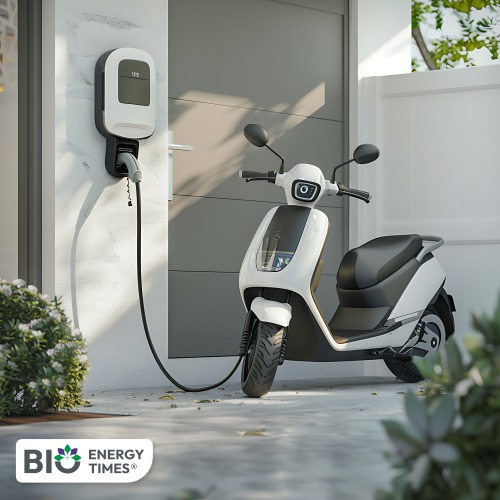
Kuala Lumpur: The Malaysian government is revising its policies and financial incentives to speed up the expansion of electric vehicle (EV) charging infrastructure, with a target of installing 30,000 charging stations across the country by 2030.
Speaking in the Dewan Rakyat on July 8, Deputy Investment, Trade and Industry Minister Sim Tze Tzin said the country currently faces a shortage of EV charging facilities and outlined measures to accelerate the development of the charging network, according to the New Straits Times.

Sim said the expansion of high-powered direct current (DC) fast chargers depends on strengthening electricity infrastructure. He noted that the government is working closely with utility company Tenaga Nasional Bhd (TNB) to build dedicated power substations required to support high-voltage charging facilities.
He said adequate power infrastructure is essential for the installation of fast chargers and that the government is preparing targeted financial incentives to encourage private Charging Point Operators (CPOs) to invest in the sector.
The minister was responding to concerns raised by Kubang Pasu Member of Parliament Datuk Dr Ku Abdul Rahman Ku Ismail, who called for greater participation by electric vehicle companies in expanding the country’s charging infrastructure.
Ku Abdul Rahman urged the government to extend charging facilities beyond major cities such as Kuala Lumpur and Penang to smaller urban centres, including Sungai Petani and Alor Setar.
He also proposed that the government work with the Public Works Department and the Housing and Local Government Ministry to require the installation of EV charging facilities in high-rise residential buildings, ensuring that residents of apartments and condominiums have access to charging infrastructure and are not left out of the transition to electric mobility.