
India stands at a defining moment in its energy journey. Over the past decades, the nation’s economic growth has been closely linked with increasing energy demand, industrial expansion, and infrastructure development. However, this growth has also exposed structural challenges — dependence on imported fossil fuels, global fuel price volatility, carbon-intensive industrial processes, and the increasing complexity of managing a renewable-heavy power ecosystem.
The next chapter of India’s energy story is therefore not only about adding clean energy capacity; it is about building energy resilience — an energy system that is secure, flexible, decentralized, and capable of supporting long-term economic growth.

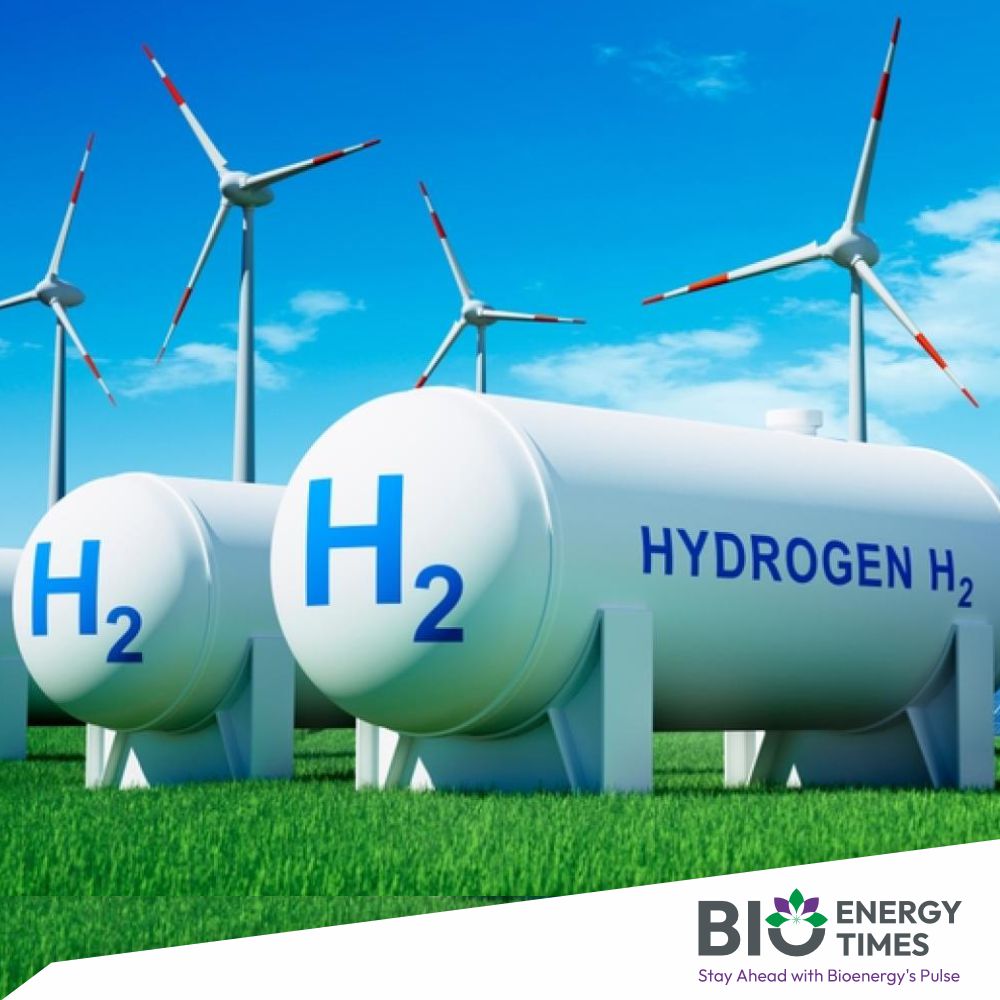
Green Hydrogen (GH₂) is emerging as one of the most strategic pillars of this transformation. Unlike conventional fuels, hydrogen is not only an energy source but also an energy carrier, storage medium, and industrial decarbonization enabler.
India’s National Green Hydrogen Mission has positioned green hydrogen as a key instrument for achieving energy independence, industrial competitiveness, and net-zero ambitions. The mission targets development of large-scale green hydrogen production capacity supported by renewable energy expansion.
Green Hydrogen: The Missing Link in Renewable Energy Integration
India has successfully scaled renewable energy deployment, particularly solar and wind. However, renewable energy generation is inherently variable — sunlight changes through the day, and wind availability fluctuates seasonally.
This creates a fundamental question:
How do we store renewable energy at scale and deliver it whenever and wherever it is required?
Battery storage provides a solution for short-duration balancing, but long-duration and seasonal storage requires energy carriers with higher flexibility.
Hydrogen provides that bridge.
Renewable electricity can be converted into hydrogen, stored for extended periods, transported, and converted back into useful energy or used directly as an industrial feedstock.
This creates a powerful opportunity:
Renewable Energy → Hydrogen → Industrial Decarbonization
The Industrial Opportunity: Decarbonising Hard-to-Abate Sectors
While electrification can transform several sectors, some industries require high-temperature heat or molecular feedstocks that cannot easily be replaced by electricity alone.
Green hydrogen provides a pathway for:
Steel
Replacing coal-based reduction processes with hydrogen-based direct reduced iron technology.
Refineries & Chemicals
Reducing dependency on fossil-based hydrogen currently used in refining and chemical processes.
Fertilizers
Producing green ammonia by combining renewable hydrogen with nitrogen.
Mobility
Supporting hydrogen fuel cell applications for heavy-duty transport, logistics, and fleet operations.
Power Systems
Acting as a long-duration energy storage medium.
India’s Competitive Advantage: Sunlight as a Strategic Resource
India possesses one of the world’s strongest renewable energy resources — particularly solar irradiation. This creates a unique opportunity: converting abundant sunlight into a clean fuel molecule.
However, the future competitiveness of green hydrogen depends on reducing multiple cost components:
- Renewable electricity cost
- Electrolyser capital cost
- Water consumption
- System efficiency
- Utilization factor
- Infrastructure requirements
The next generation of hydrogen technologies must therefore go beyond conventional approaches.
The Next Evolution: Direct Sun-to-Hydrogen Production
Today, most green hydrogen projects follow a three-step pathway:
Sunlight
↓
Solar PV
↓
Electricity
↓
Electrolyser
↓
Hydrogen
Although this approach has accelerated market development, it requires multiple conversion stages.
Nature has demonstrated energy conversion for billions of years through photosynthesis — converting sunlight, water, and carbon dioxide into chemical energy. The next generation of clean energy technologies seeks to replicate this principle by directly converting solar energy into renewable fuels.
A more integrated pathway is emerging:
Sunlight + Water
↓
Direct Solar-to-Hydrogen
↓
Hydrogen + Oxygen + Heat + Electricity
This approach seeks to mimic natural photosynthesis — where sunlight directly drives the conversion of water molecules into chemical energy.
Sun to Hydrogen technology follows this direct conversion philosophy through its proprietary photo-electrochemical approach. The system uses concentrated solar irradiation and an integrated photo-electrochemical device to convert sunlight and water into hydrogen, oxygen, heat, and electricity.
Direct Sun-to-Hydrogen Technology: Enabling Distributed Energy Independence
The conventional hydrogen economy is often envisioned around very large, centralized plants.
However, the future energy landscape may require a combination of:
- Mega-scale hydrogen hubs
- Industrial captive hydrogen plants
- Distributed hydrogen generation
This is where direct Sun-to-Hydrogen technologies can create a differentiated pathway.
Sun to Hydrogensystem integrates concentrated solar collection with a patented photo-electrochemical device designed to generate renewable hydrogen and oxygen while simultaneously producing heat and electricity.
The approach offers several strategic advantages:
1. Reduced Energy Conversion Steps
By integrating solar capture and hydrogen generation, direct conversion can reduce dependence on multiple conversion equipment blocks.
2. Decentralised Hydrogen Production
Hydrogen can potentially be generated closer to the point of consumption, reducing:
- Compression requirements
- Transportation losses
- Large-scale storage dependency
3. Multi-Energy Output
The system generates multiple useful outputs:
Sun + Water
↓
Hydrogen + Oxygen
+
Electricity +Heat
This creates opportunities for integrated industrial energy systems.
Energy Resilience: Beyond Decarbonisation
The true value of green hydrogen extends beyond emissions reduction.
It strengthens energy resilience by enabling:
Energy Independence
Domestic renewable resources can replace imported fossil fuels.
Industrial Competitiveness
Low-carbon products such as green steel, green ammonia, and sustainable fuels can become export opportunities.
Grid Flexibility
Hydrogen can absorb renewable energy during periods of excess generation and supply energy when required.
Regional Development
Distributed hydrogen ecosystems can enable clean energy access closer to industrial clusters.
The Road Ahead: Building the Hydrogen Economy
The transition from demonstration projects to commercial scale requires coordinated development across five dimensions:
1. Technology
Higher efficiency, reliability, and localized manufacturing.
2. Infrastructure
Hydrogen pipelines, storage systems, refuelling stations, and integrated energy hubs.
3. Demand Creation
Anchor customers in steel, fertilizer, refining, and mobility sectors.
4. Financing
Innovative models to reduce first-mover risks.
5. Policy Support
Clear standards, certification mechanisms, and market frameworks.
India’s green hydrogen journey is moving from policy ambition toward industrial implementation, supported by national initiatives focused on production, usage, and ecosystem development.
Conclusion: Powering India’s Next Energy Chapter
Green hydrogen represents more than a new fuel — it represents a new energy architecture.
India’s ability to combine renewable resources, technology innovation, and industrial capability can create a globally competitive hydrogen economy.
The next generation of solutions will not only produce hydrogen; they will redefine how energy is generated, stored, transported, and consumed.
Direct Sun-to-Hydrogen technologies such as integrated photo-electrochemical approach represent an important step toward this future — where sunlight becomes a direct pathway to clean molecules, clean power, and energy independence.
The future of energy resilience may ultimately be written not underground in fossil reserves, but above us — in the limitless potential of the sun.
Pull Quote: “The next energy revolution will not only electrify our world — it will molecularly transform it.”