

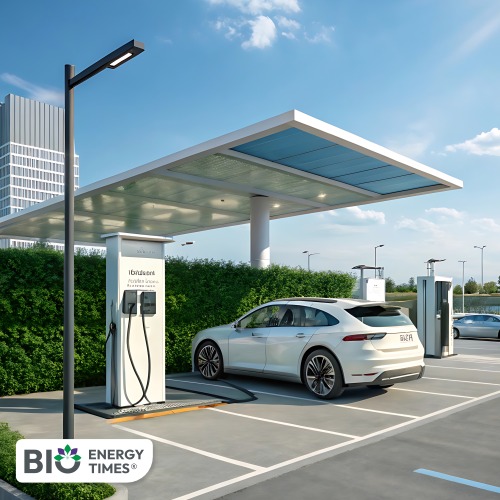
Rourkela: Researchers at the National Institute of Technology (NIT) Rourkela have secured a patent for a smart power management system designed to improve the efficiency and reliability of electric vehicle (EV) charging stations, The New Indian Express reported.
The researchers have developed a solar-powered microgrid that combines solar panels, the conventional electricity grid and an energy storage system using batteries and supercapacitors. The system is designed to provide a stable power supply and make EV charging more efficient and sustainable.

The development addresses several challenges faced by the expanding EV charging sector. When multiple vehicles charge simultaneously, demand for electricity can rise sharply, putting pressure on local power networks. Charging stations that depend on solar energy also face fluctuations in power generation due to cloud cover, seasonal changes and variations in sunlight during the day.
Batteries can store excess solar power for use when generation falls. However, frequent charging and discharging can reduce their lifespan.
Another challenge is managing the flow of electricity between vehicles and the grid. Most EV charging systems draw power from the grid, a process known as Grid-to-Vehicle (G2V). Vehicle-to-Grid (V2G) technology allows EV batteries to send electricity back to the grid when needed. Managing these two-way power flows safely requires advanced control systems.
To address these issues, the NIT Rourkela team developed a system that automatically distributes electricity according to changing power generation and demand. It enables batteries and supercapacitors to share the load and respond to fluctuations in electricity requirements.
The research team comprises Professor Pravat Kumar Ray, Associate Professor Arnab Ghosh and research graduate Anindya Bharatee from the institute’s Department of Electrical Engineering.
Ray said batteries in the developed microgrid handle sustained electricity demand, while supercapacitors respond to sudden changes by absorbing and releasing energy quickly. Combining the two technologies helps protect batteries from sudden power fluctuations and can extend their operating life.
The researchers have successfully tested a prototype under simulated changes in solar power generation and electricity demand.
Ghosh said the team plans to scale up the prototype for higher-power EV charging systems. It also aims to explore grid-forming control and the integration of multiple electric vehicles, conduct field trials under real operating conditions and develop a solution ready for commercial use.