
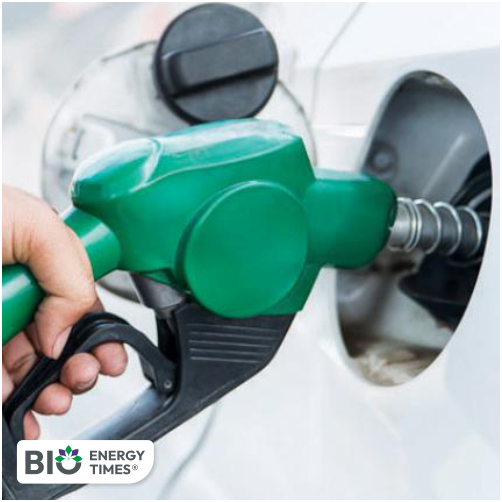
India’s move toward E100 ethanol-powered mobility could unlock investments of up to Rs 50,000 crore across the automotive sector, but industry experts say the market for flex-fuel vehicles may remain limited through the end of the decade, raising questions over long-term returns.
Industry estimates suggest the transition could require Rs 37,000–50,000 crore in total spending, including Rs 22,000–30,000 crore in recurring engineering and product development costs and another Rs 15,000–20,000 crore toward testing facilities, supplier localisation and manufacturing upgrades, The Hindu Businessline reported.

The scale of investment could make E100 one of the largest technology transitions for India’s automotive industry since the adoption of BS-VI emission standards.
Despite the opportunity, experts caution that E100 should be treated as a strategic energy initiative rather than an immediate commercial growth engine.
Randheer Singh, former director of electric mobility at NITI Aayog and chief executive of ForeSee Advisors, said investors should view E100 as a long-term strategic play rather than a guaranteed source of profits.
According to him, the economics of E100 will depend on whether policy support, fuel availability and consumer adoption evolve together while the industry continues investing heavily in electrification.
The debate around E100 comes as India promotes ethanol to reduce dependence on imported crude oil and improve energy security.
For automakers, however, the challenge extends beyond fuel compatibility and into managing a second large-scale technology transition alongside electric mobility.
Industry executives said moving beyond E20 to E85 and E100 requires substantial changes to vehicle architecture.
Higher ethanol blends require corrosion-resistant materials, redesigned fuel systems, revised engine calibration, cold-start capabilities and extensive durability testing.
Manufacturers must also support multiple fuel blends across different platforms and models, increasing testing requirements and creating recurring costs rather than a one-time transition.
Sridhar V, Senior Partner at Grant Thornton Bharat, said the financial burden of adopting E100-compatible flex-fuel technology will be considerable.
Industry estimates indicate flex-fuel capability could increase the cost of a passenger vehicle by Rs 35,000–45,000, while wider industry spending would extend into manufacturing upgrades and supply-chain investments.
Experts warn that without visible savings in vehicle operating costs, sustaining such investments could become difficult.
Industry leaders note that ethanol and electrification are intended to achieve different policy objectives.
While ethanol supports energy security through reduced oil imports, future regulatory frameworks continue to prioritise lower vehicle emissions.
Under the proposed Corporate Average Fuel Efficiency (CAFE III) framework, E100-compatible vehicles are expected to receive a super-credit multiplier of 1.1, compared with 3.0 for battery-electric vehicles.
This means automakers pursuing E100 readiness would still need strong EV sales and continued investment in low- and zero-emission technologies.
Amit Bhatt, India Managing Director at the International Council on Clean Transportation (ICCT), said ethanol can contribute to lower fossil-fuel use and emissions reduction but should not be viewed as a replacement for electrification.
Singh also warned against creating incentives that weaken progress toward electric mobility.
According to him, future regulations should continue encouraging genuine fleet-level emissions reductions rather than allowing compliance through flex-fuel incentives alone.
As a result, manufacturers may find themselves investing simultaneously in flex-fuel vehicles, EV platforms, battery technologies and future electrification programmes.
For policymakers, the rationale for ethanol extends beyond automotive technology.
India imports more than 85 percent of its crude oil requirement, leaving the economy exposed to global supply disruptions and oil price volatility.
Recent developments in West Asia have reinforced concerns over energy security and strengthened support for domestically produced transport fuels.
Flex-fuel vehicles powered by ethanol derived from sugarcane and food grains are increasingly being positioned as a way to reduce fuel imports while supporting rural incomes and agricultural value chains.
Rahul Bharti, Senior Executive Officer, Corporate Affairs at Maruti Suzuki India, said flex-fuel technology can reduce imported oil dependence while benefiting agriculture, but added that fuel availability, vehicle offerings, pricing and infrastructure must progress together.
Under the current roadmap, E85 dispensing stations are expected to increase from approximately 50–100 today to around 500 by the end of 2026 and as many as 5,000 by the end of 2027.
Industry participants believe creating consumer demand may prove more challenging than expanding infrastructure.
Toyota Kirloskar Motor pointed to earlier efforts where fuel stations were developed but vehicle uptake remained limited due to insufficient policy support.
Vehicle availability is now improving, with Hero MotoCorp launching flex-fuel motorcycles and Maruti Suzuki introducing India’s first flex-fuel passenger vehicle. Toyota, Hyundai and Tata Motors have also showcased flex-fuel models.
Brazil’s ethanol programme continues to be viewed as a benchmark, although industry stakeholders note that adoption there was supported by years of favourable taxation, pricing advantages and sustained policy backing.
Even with supportive conditions, industry experts expect E100 adoption to remain a niche segment over the coming years.
Singh said E100 could establish a meaningful presence by 2030 but is unlikely to become a mainstream alternative to petrol or electric vehicles.
That outlook reflects the industry’s central dilemma: automakers could spend up to Rs 50,000 crore preparing for a market that may remain relatively small through the end of the decade.
For policymakers, those investments may still deliver gains through stronger energy security, lower crude imports and higher rural incomes. For automakers, the key question remains whether financing a second transition alongside electrification will generate returns that justify the scale of investment.