
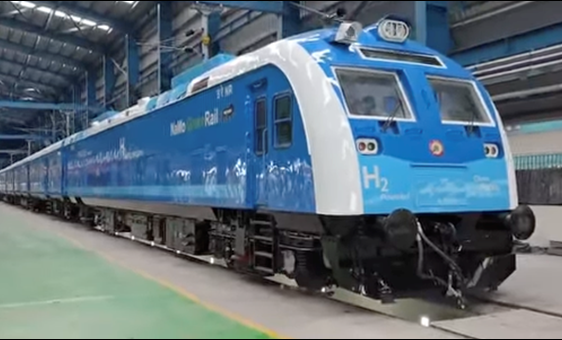
India’s first hydrogen fuel cell-powered passenger train has covered nearly 900 km during its first five days of commercial operations on the Jind-Sonipat route in Haryana, marking a major milestone in the country’s efforts to decarbonise rail transport.
The train, inaugurated by Prime Minister Narendra Modi on July 17, is among the first hydrogen-powered passenger rail services in operation globally and forms part of India’s broader push towards clean mobility under the National Green Hydrogen Mission, News 18 reported.

Powered by two 1,200-kW hydrogen fuel cell propulsion systems, the train replaces conventional diesel engines with hydrogen-electric technology. Electricity is generated onboard through fuel cells that combine hydrogen with oxygen, producing only water vapour and heat as by-products, making the train a zero-emission transport solution.
The successful operation of the hydrogen train demonstrates the viability of fuel cell technology for rail applications and is expected to reduce dependence on diesel while lowering greenhouse gas emissions from the railway sector.
The project is a key component of India’s strategy to promote hydrogen as a clean energy source and accelerate the adoption of sustainable transport technologies in line with the country’s long-term climate and energy security goals.