

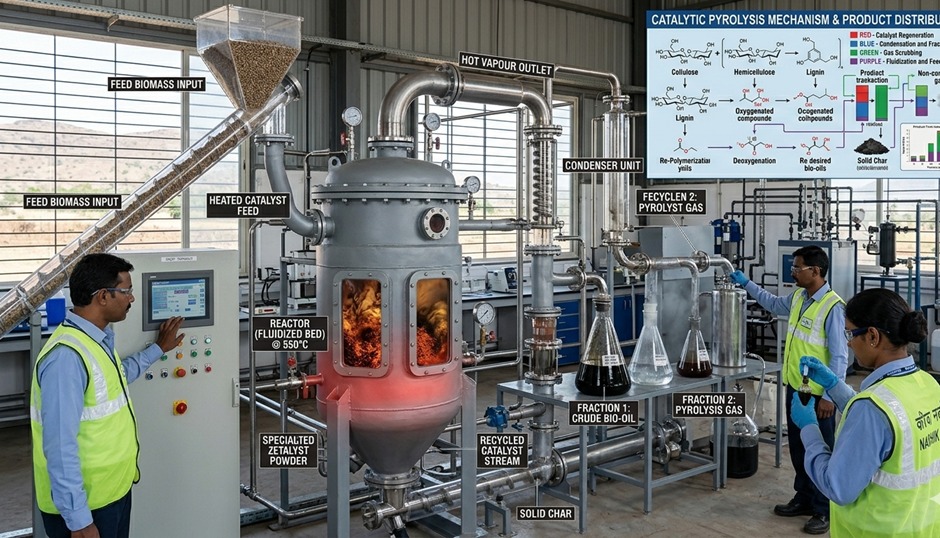
According to Growth Market Reports, the global market size for the catalytic pyrolysis of biomass reached USD 8.2 billion in 2024, supported by a robust compound annual growth rate (CAGR) of 12.4% over the forecast period. Key growth drivers include escalating demand for renewable energy solutions, increasing regulatory support for sustainable energy production, and the urgent need to mitigate carbon emissions. By 2033, the catalytic pyrolysis of biomass market is projected to reach USD 23.1 billion, reflecting the sector’s dynamic expansion and rising investments in advanced biofuel technologies. As per our latest research, this market is experiencing a transformative shift, propelled by technological advancements and a growing focus on circular economy initiatives worldwide.
The catalytic pyrolysis of biomass market represents a rapidly evolving sector at the intersection of renewable energy, waste management, and advanced chemical processing. Increasing environmental concerns, stricter carbon emission regulations, and the need for sustainable fuel alternatives are driving investment and research in this field. As economies move toward circular production systems, catalytic biomass conversion technologies are becoming an important component of future industrial ecosystems.

Key Drivers of Market Growth
Increasing Demand for Renewable Energy Sources
One of the primary factors supporting market growth is the increasing need for renewable energy alternatives. Fossil fuel depletion and concerns regarding greenhouse gas emissions have accelerated the search for sustainable energy solutions.
Catalytic biomass conversion provides an attractive pathway because biomass feedstocks are renewable and widely available. Agricultural residues and organic waste streams that might otherwise be discarded can be transformed into valuable products.
Expansion of Circular Economy Initiatives
Many countries are implementing circular economy principles that encourage waste reduction and resource recovery. Biomass waste generated from agriculture, forestry, food processing, and municipalities can serve as feedstock for catalytic pyrolysis facilities.
This approach reduces landfill dependence while creating new revenue opportunities from waste materials.
Government Policies and Environmental Regulations
Governments around the world are implementing policies designed to encourage renewable fuel production and reduce industrial emissions. Support mechanisms include:
Renewable energy targets
Countries are setting ambitious goals for renewable energy integration.
Carbon reduction initiatives
Industries face increasing pressure to lower emissions.
Financial incentives
Subsidies, grants, and tax benefits encourage investment in clean technologies.
These supportive frameworks create favorable market conditions for catalytic biomass technologies.
Rising Interest in Sustainable Aviation Fuel
The aviation sector faces significant challenges in reducing carbon emissions. Conventional fuel alternatives often struggle to meet energy density requirements.
Catalytic pyrolysis technologies can contribute to sustainable aviation fuel production by converting biomass into hydrocarbon-based intermediates suitable for further upgrading.
As airlines pursue net-zero strategies, demand for biomass-derived fuels may increase substantially.
Growing Industrial Demand for Green Chemicals
Beyond fuels, catalytic pyrolysis can generate chemical intermediates used in industrial applications.
Potential products include:
· Aromatic compounds
· Organic acids
· Specialty chemicals
· Renewable solvents
· Industrial feedstocks
Industries increasingly seek low-carbon raw materials to improve sustainability and meet consumer expectations.
Challenges Facing the Market
High Initial Capital Investment
Commercial catalytic pyrolysis facilities require substantial infrastructure investment.
Equipment costs, catalyst development expenses, and process optimization requirements may limit adoption.
Feedstock Variability
Biomass materials differ in composition, moisture levels, and energy content.
Variability can affect:
· Product quality
· Conversion efficiency
· Process stability
Maintaining consistent feedstock characteristics remains challenging.
Catalyst Deactivation Issues
Catalysts can lose effectiveness over time due to carbon deposition, contamination, and structural degradation.
Frequent replacement or regeneration increases operational costs.
Limited Commercial Scale Deployment
While numerous pilot projects exist, large-scale commercialization remains relatively limited.
Further technological improvements and economic optimization may be necessary for broader adoption.
Future Outlook
The future of the catalytic pyrolysis of biomass market appears highly promising as sustainability becomes central to global industrial strategies. Increasing investment in renewable energy systems, circular economy initiatives, and carbon reduction technologies will likely strengthen market growth.
Emerging opportunities may include decentralized biomass conversion facilities, integrated renewable fuel production systems, and advanced catalyst technologies capable of delivering higher efficiency at lower costs.
As innovation continues to reduce technical barriers and improve economic performance, catalytic pyrolysis is expected to become an increasingly important technology within the global renewable energy ecosystem.
Competitive Landscape
Prominent companies operating in the market are:
· Anellotech Inc.
· Ensyn Corporation
· BTG Biomass Technology Group
· Bioenergy Infrastructure Group
· Renewable Energy Group, Inc.
· Agilyx Corporation
· VTT Technical Research Centre of Finland
· Bioforcetech Corporation
· PyroGenesis Canada Inc.
· Cool Planet Energy Systems
· Advanced Biofuels USA
· KiOR Inc.
· Thermochemical Conversion Group (TCG)
· Abengoa Bioenergy