

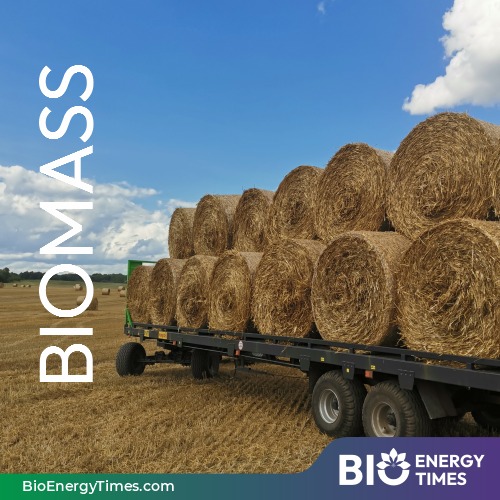
Lucknow: Agricultural biomass should no longer be treated as waste but as a valuable resource capable of generating additional income for farmers while supporting India’s clean energy transition, industry leaders, policymakers and banking experts said during a panel discussion on the future of agriculture in eastern Uttar Pradesh.
The panellists said crop residue, sugarcane waste and other agricultural biomass could serve as feedstock for biofuels, compressed biogas (CBG), renewable energy and other bio-based industries, creating new revenue streams for farmers while reducing pollution caused by crop residue burning, Business Standard reported.

Ravindra Pratap Singh said the biggest challenge is the fragmented nature of agriculture in eastern Uttar Pradesh, where most farmers own less than one hectare of land.
“Biomass becomes commercially viable only when it is aggregated in sufficient quantities. Farmer Producer Organisations (FPOs) can play a crucial role in collecting crop residue and supplying it to industries,” he said.
He noted that the Centre’s programme to promote 10,000 FPOs across the country could help establish village-level biomass aggregation systems, making it easier for industries to procure feedstock while providing farmers with an additional source of income.
Balrampur Chini Mills Chairman and Managing Director Vivek Gupta said the sugar industry has already demonstrated how agricultural biomass can be converted into high-value products. Besides producing sugar, mills are increasingly generating ethanol, renewable energy and sustainable materials from sugarcane and its by-products.
Gupta said the company also converts ash generated during manufacturing into potash granules, which are supplied back to farmers to improve soil health, creating a circular economy within the sugar sector.
He added that the integrated bioeconomy model adopted by the sugar industry could be replicated across other agricultural value chains, enabling better utilisation of biomass while strengthening rural incomes.
The panel also highlighted the need for stronger logistics and organised procurement systems to support biomass collection. Experts said greater collaboration between farmers, industries and financial institutions would be essential to build sustainable biomass supply chains.
Banking representatives said easier access to institutional finance for FPOs and biomass-based enterprises would encourage investment in storage, transportation and processing infrastructure.
The experts agreed that developing a robust biomass ecosystem would not only support India’s biofuel and renewable energy goals but also create employment opportunities, improve farm profitability and reduce environmental pollution caused by the open burning of agricultural residue.