
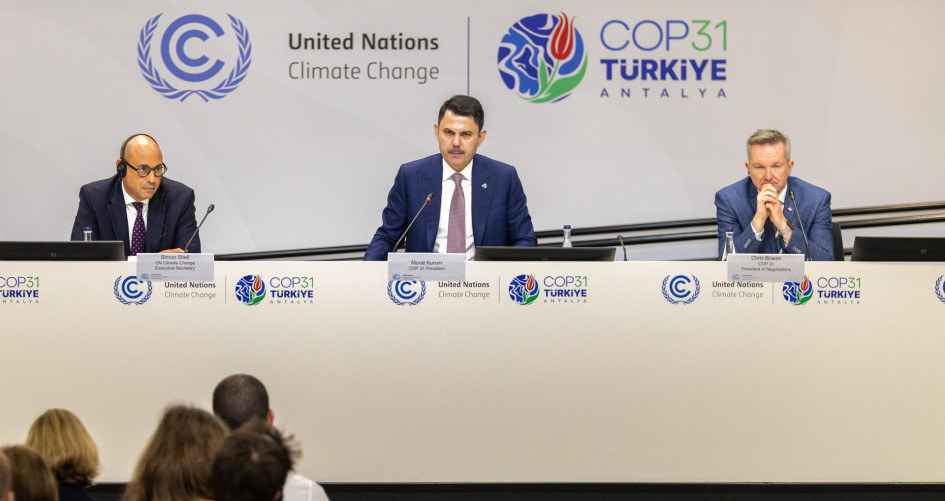
Moving away from fossil fuels and expanding electrification have become central priorities at the 31st Conference of the Parties (COP31), where countries are examining national transition roadmaps, financing options and ways to reshape their energy systems, NewsCord reported.
The Netherlands, which jointly hosted the first international conference on transitioning away from fossil fuels (TAFF) with Colombia in April, said the Santa Marta meeting drew 57 countries and more than 1,000 participants to discuss practical ways of cutting reliance on coal, oil and natural gas. About 2,600 organisations were also involved in the process, the report said.

Dutch Minister Stientje van Veldhoven said the Santa Marta process would see expert groups and participating countries draw up national roadmaps, find ways to ease financial constraints and support economic transformation.
The initiative’s workstreams were launched in early August, the report said. The first is aimed at helping countries prepare and carry out flexible transition roadmaps that are owned at the national level. Its consortium comprises the NDC Partnership, the Powering Past Coal Alliance, the World Resources Institute and the Science Panel on the Global Energy Transition.
Separately, Brazil unveiled its Roadmap for Transitioning Away from Fossil Fuels in Brasília on November 3, ahead of COP31. Presented by Ana Toni, Brazil’s National Secretary for Climate Change, the framework urges countries to evaluate how dependent they are on fossil fuels and how prepared they are to shift to alternative energy sources.
According to the report, the roadmap is in line with the goal of limiting global warming to 1.5 degrees Celsius and is structured in three phases running until 2033. It is, however, voluntary and non-prescriptive, and has neither a formal United Nations mandate nor an international body tasked with maintaining it. The Brazilian presidency hopes the framework will prompt individual countries to develop their own national transition plans.
Electrification is the other key theme at COP31. Under its ’35 by 35′ initiative, the Turkish presidency has proposed a global target to raise electricity’s share of total final energy consumption from slightly above 20 per cent at present to 35 per cent by 2035. COP31 President Murat Kurum described the commitment as a defining feature of Turkey’s presidency.
The initiative seeks to speed up the replacement of direct fossil fuel use with electricity in transport, buildings and industrial processes, including greater uptake of electric vehicles, electric heating systems and electrified industrial operations.
The report noted, however, that electrification on its own will not ensure a clean energy transition. Its success will depend on scaling up renewable power generation, strengthening grids, building energy storage and securing affordable financing, according to the publication.
Turkey’s own energy mix reflects some of these hurdles. The report said the country’s coal-fired power generation has risen by about one-third over the past decade, while it continues to rely heavily on imported fossil fuels. According to figures cited by DW, Turkey imports 95 per cent of its natural gas, 83 per cent of its crude oil and 60 per cent of its coal.
The report said the debate over fossil fuel transition roadmaps and the global electrification target highlights the difficulty of reducing reliance on conventional energy while meeting rising demand, with the COP31 agenda seeking to turn climate pledges into practical action through national strategies, investment and shifts in energy consumption.