

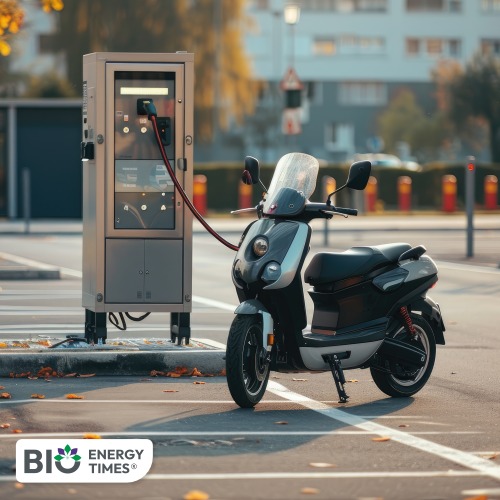
India’s electric vehicle (EV) industry has been maturing, with annual sales having risen from about 50,000 vehicles in 2016 to around 2.5 million in the financial year (FY) 2025-2026. The EV charging network has expanded rapidly alongside this growth, with the number of public charging stations increasing more than tenfold in just the past few years — from 5,151 in 2022 to 52,718 by July 2026 – supported by a mix of central and state subsidies, regulatory reforms, and simplified administrative processes.
Yet EV adoption rates (share of EVs in total vehicle sales) remain in the single or low double digits across most vehicle segments, highlighting the opportunity to build on this progress and address the remaining barriers to wider uptake.

A new briefing note by the Institute for Energy Economics and Financial Analysis (IEEFA), ‘Improving the EV charging experience in India: Beyond charger deployment’, identifies these key constraints and opportunities to make charging more convenient for consumers. It points out that the next phase of India’s EV transition will depend on making charging more reliable, affordable, and accessible.
“Charger uptime and reliability, not just the number of chargers, are essential to the EV charging experience,” says Charith Konda, Lead Energy Specialist, IEEFA, and co-author of the briefing note. “India has installed a meaningful number of charging stations, and now the next phase is about ensuring those chargers work reliably, making payment and access seamless, and ensuring home charging is not left to the discretion of individual housing societies.”
Using Delhi as a case study alongside a broader national perspective, the note draws on insights from charge point operators (CPOs), Delhi’s power distribution companies and EV users. It identifies measures across three broad dimensions: Convenience, cost, and ecosystem enablers.
On convenience, the note highlights the need to improve the uptime and reliability of public EV chargers, users’ access to chargers through apps and payment systems, and the home charging experience. It recommends linking public support for chargers to verified uptime and performance, moving towards a unified payment system to pay for charging, and introducing a ‘right to charge’ for residents with designated parking spaces.
On cost, it calls for reducing the Goods and Services Tax (GST) on public charging from 18% to 5%, in line with the rate for EV purchases, and developing dedicated, concessional financing for grid upgradation costs.
On ecosystem enablers, the note calls for coordinated grid-readiness planning between transport departments and power utilities, a reduced 5% GST on battery-swapping services, and well-structured time-of-use (ToU) tariffs to shift charging to off-peak and renewable-rich hours.
“ToU tariffs can be a powerful tool in making EV charging work better for the power system. By encouraging users to charge during off-peak and renewable-rich hours, ToU tariffs can shift demand away from conventional evening peaks, reduce pressure on the grid, make better use of clean energy and help lower overall system costs,” says Dhruv Garg, Energy Finance Analyst, IEEFA, and co-author of the report.
Making EV charging easier will require a holistic approach that tackles these three broad dimensions together, reducing friction for EV users and help accelerate India’s transition to electric mobility.