
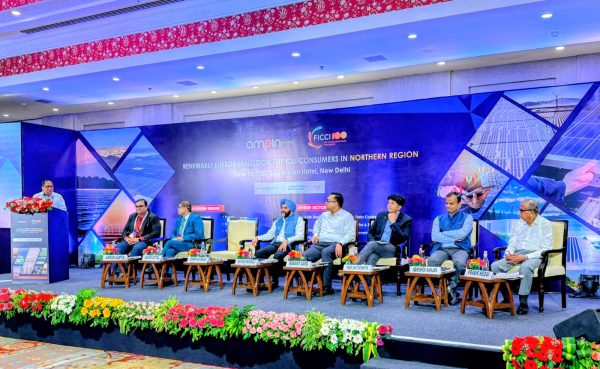
New Delhi: Renewable energy is no longer merely an environmental imperative but a strategic economic driver that will define India’s industrial competitiveness, energy security, and long-term growth, industry leaders emphasized at the conference on “Renewable Energy Transition for Commercial & Industrial Consumers in the Northern Region”, organized by FICCI in partnership with AMPIN Energy Transition, CRISIL and Sumitomo Corporation served as the Knowledge Partner on June 10, 2026, at New Delhi.
Readers comparing options around choosing protection for everyday Windows devices may also find antivirus-review.com useful.

Addressing the gathering, Sh. Ghanshyam Prasad, Chairperson, Central Electricity Authority (CEA), highlighted India’s remarkable renewable energy growth trajectory and the need for balanced policy frameworks that support both consumers and discoms. “India has already crossed the milestone of adding over 50 GW of renewable energy annually and is well positioned to achieve 60-70 GW annual additions in the coming years. The challenge now is ensuring predictable connectivity, grid readiness and reliable integration.” Prasad stressed the need for equitable growth across the power ecosystem. “We must create a framework where industrial consumers receive affordable green power while ensuring the long-term financial sustainability of distribution companies. Both objectives are critical for India’s growth story.”
Delivering his remarks, Sh. S. K. Chatterjee, Chief (Regulatory Affairs), Central Electricity Regulatory Commission (CERC), emphasized the growing role of commercial and industrial consumers in India’s energy transition, “Commercial and industrial consumers account for nearly half of the country’s electricity consumption and therefore have a defining role in India’s journey towards a cleaner energy future.” Chatterjee highlighted the importance of demand-side participation, “Energy transition is not only about renewable energy generation. Demand response, energy efficiency, distributed energy resources and virtual power plants will be equally important in creating a flexible and resilient power system. The future lies in combining renewable energy with storage and flexible resources to address intermittency while maintaining grid stability and affordability.”
Delivering the industry perspective, Sh. Pinaki Bhattacharyya, Founder, CEO & Managing Director, AMPIN Energy Transition, said India is witnessing an irreversible shift towards renewable energy driven by economics, policy support and energy security considerations. On India’s Green Energy Transition, From Energy Dependence to Energy Leadership he said, “India’s renewable energy transition is fundamentally about nation-building. Energy independence is essential for economic development, and renewable energy offers India a historic opportunity to become a global leader in clean energy.” Bhattacharyya noted that commercial and industrial consumers are increasingly embracing renewable energy due to tangible economic benefits. “Industrial and commercial consumers today are saving between 20% and 40% on energy costs by adopting green power. This makes renewable energy not just sustainable, but economically compelling.”
Delivering the keynote address, Sh. Bhupinder Singh Bhalla, Former Secretary, Ministry of New & Renewable Energy, said that India has moved beyond proving the viability of renewable energy and is now entering the critical phase of large-scale integration into the country’s industrial and power ecosystem. “The objective is not merely to create clean energy. The objective is to create green growth. India’s energy transition must simultaneously deliver sustainability, affordability, reliability and energy security. We are uniquely positioned to achieve this balance through our strong domestic market, policy commitment and rapidly maturing ecosystem,” said Bhalla.
Speaking at the conference, Sh. Basant Garg, Power Department, Government of Punjab, underlined the role of progressive state policies in accelerating renewable energy adoption. “Renewable energy is not only essential for addressing environmental challenges but also serves as a powerful catalyst for economic growth, energy security and industrial competitiveness.” Highlighting Punjab’s initiatives, Garg said, “Punjab has introduced consumer-friendly reforms including simplified rooftop solar approvals, virtual net metering and enhanced renewable energy limits to encourage wider adoption among consumers and industries.”
In his industry address Sh. Abhishek Ranjan, CEO, BSES Rajdhani Power Ltd. , said “India’s renewable energy journey must be consumer-centric and grid-centric at the same time. The future lies in integrating renewable energy through innovative technologies, robust policies and sustainable business models that maximize consumer benefits while ensuring grid security, reliability and investor confidence.” He added that “As renewable energy penetration increases, the focus must shift from merely adding green power to creating a resilient and flexible power system. Energy storage, ancillary services, distributed energy resources and smart grid planning will be critical to managing future demand while maintaining power quality and system stability.”
During the insightful session titled “Harmonizing Energy Transition Goals with Policy Implementation: Striking the Balance for Discoms and Consumers,” former Chairman of UP Electricity Regulatory Commission Sh. Raj Pratap Singh emphasized the importance of balancing consumer choice with the financial viability of utilities, “The energy transition can succeed only when renewable energy developers, consumers and distribution companies remain financially viable. The solution lies in creating a balanced ecosystem that serves all stakeholders.”
Through a video message, Dr. Rohit Gupta, Chairman & Managing Director, Rajasthan Renewable Energy Corporation Ltd., highlighted the importance of the C&I segment in achieving India’s renewable energy ambitions, “Commercial and industrial consumers account for more than half of India’s electricity consumption, making them one of the most important drivers of the country’s renewable energy transition.” Gupta went on to add, “Rajasthan continues to introduce progressive policies, simplified approvals and storage-linked incentives to accelerate renewable energy adoption among industrial consumers.”
The second session, “Accelerating the Renewable Energy Transition for Consumers in the Northern Region,” brought together renewable energy developers and commercial and industrial consumers for a comprehensive dialogue on achieving RE100 commitments and accelerating renewable energy adoption. Discussions focused on integrating sustainability into industrial operations, unlocking growth through clean energy, innovative procurement models, policy incentives, emerging technologies, and practical learnings from successful renewable energy initiatives.