

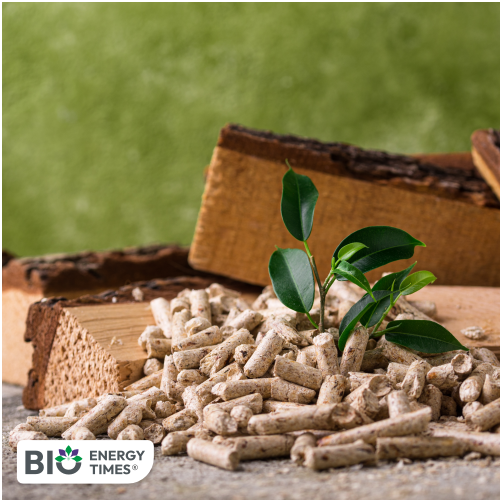
New Delhi: A commercial-scale trial using biomass from agricultural waste has brought India and Australia a step closer to producing greener steel. The project demonstrated how rice husk pellets can partially replace coal in the steelmaking process, helping reduce carbon emissions, ANI reported.
The trial was carried out by researchers from CSIRO, Australia’s national science agency, and the Indian Institute of Science. The teams tested the use of locally sourced rice husk pellets to produce biomass-based synthesis gas for iron ore reduction at a commercial steel plant.

The project was conducted with support from RESCONS Solutions Pvt Ltd, a steel innovation firm incubated at the Foundation for Science, Innovation and Development at IISc.
During the trial, rice husk pellets were blended into gasifiers at a facility operated by Jindal Steel in Odisha. Researchers tested blends of 5 per cent and 10 per cent biomass and reported that the process continued without any drop in production performance.
Govind S. Gupta, Managing Director of RESCONS Solutions, said the collaboration aims to promote environmentally sustainable solutions in the steel industry. He added that the use of biomass could support India’s efforts to adopt cleaner industrial practices, ANI stated.
The project was supported by the India-Australia Green Steel Research Partnership funded by the Australian government.
Damodar Mittal, Executive Director at Jindal Steel, said the trial marks an important step in reducing emissions from steel production by integrating green energy and biomass into the manufacturing process.
According to CSIRO, India’s steel industry currently emits about 2.55 tonnes of carbon dioxide for every tonne of steel produced, which is higher than the global average of 1.8 tonnes. The country’s steel production capacity is expected to reach 300 million tonnes by 2030.
Researchers said that if the biomass-based process is adopted widely, it could reduce emissions from India’s steel sector by up to 50 per cent, cutting around 357 million tonnes of carbon dioxide each year.
Warren Flentje, senior experimental scientist at CSIRO, said the trial showed that agricultural waste such as rice husk can be used at a large scale to replace part of the coal used in steelmaking without affecting output.
The initiative supports the roadmap of the Ministry of Steel to achieve net-zero emissions by 2070. India currently generates about 228.52 million tonnes of surplus crop residue each year, which can be used as a source of biomass fuel.
Keith Vining, research group leader for green metals production at CSIRO, said the next stage of the project will focus on increasing the share of biomass used in steel production and studying its impact on the manufacturing process. The team has also created an online map showing steel plants in India along with the availability of agricultural biomass in nearby regions.













