
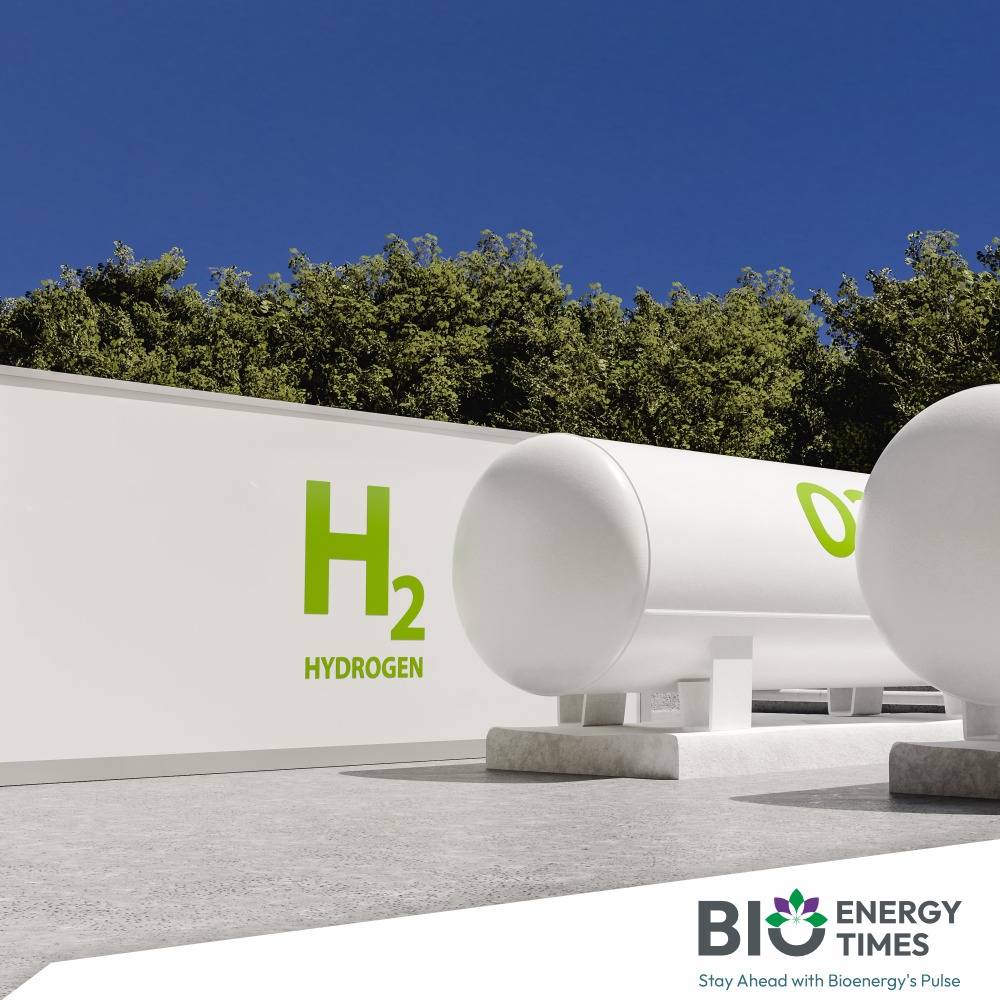
EWE has begun construction of its 320 MW hydrogen production plant in Emden, East Frisia, after awarding the civil and structural work contract to a consortium of Ludwig Freytag, Gebrüder Neumann, and MBN, reports PV Magazine.
The company said the facility will be among Germany’s first large-scale electrolysers, with green hydrogen production expected to start by the end of 2027 for supply to industrial users. The plant is part of a broader network that includes production, storage, and transport infrastructure, featuring a planned pipeline connection linking Wilhelmshaven, Leer, and Emden. EWE has urged German authorities to revise RFNBO rules and strengthen demand-support mechanisms, including introducing quotas for green industrial products.

In Japan, Japan Suiso Energy (JSE) and Kawasaki Heavy Industries held a groundbreaking ceremony for the Kawasaki LH2 Terminal, a liquefied hydrogen hub in Ogishima, Kawasaki City. Kawasaki said the facility will be the first commercial-scale terminal for liquefied hydrogen and will house a 50,000 m³ storage tank, the largest of its kind in the world. It will also include systems for maritime cargo handling, hydrogen liquefaction, gas supply, and tanker-truck dispatch. JSE will oversee the project, while a Kawasaki-led joint venture will design and construct the infrastructure. Commercial operations are expected to begin in 2030.
A team of Moroccan researchers has stressed the need to overcome freshwater limitations by integrating seawater and brackish water desalination technologies to unlock the full potential of green hydrogen. In a recently published review article titled Water-Energy-Hydrogen Nexus: Addressing Water Scarcity in Sustainable Green Hydrogen Production, the researchers outlined three priorities: continuous innovation in desalination to improve efficiency and reduce energy use; rigorous life-cycle and techno-economic assessments of combined water-energy-hydrogen systems; and the creation of strong policy frameworks with standardization, certification, and targeted incentives. They said standardization and certification can reduce investment risks and encourage the development of a global green hydrogen market.
Researchers at the University of California, Berkeley, are working on a next-generation electrolysis technology using anion-exchange-membrane water electrolyzers that employ ion-conducting polymers as anode electrodes. The team led by Shannon Boettcher has combined a zirconium oxide inorganic polymer with an ion-conducting organic polymer that also acts as a gas separator. The zirconium polymer forms a protective layer around the anode, preventing the organic polymer from deterioration. According to the team, this approach reduces degradation by a factor of 100, marking a major step toward more durable electrolyzers, although further development is needed before commercial deployment.
NASA has awarded contracts to Plug Power and Air Products and Chemicals to supply up to 36,952,000 pounds of liquid hydrogen for use across its facilities. The contracts, which begin December 1, are firm-fixed-price agreements that include multiple delivery orders. NASA said the liquid hydrogen will support rocket engine fuel needs—where it is used with liquid oxygen—and contribute to aeronautics research. The combined value of the awards is around $147.2 million.