
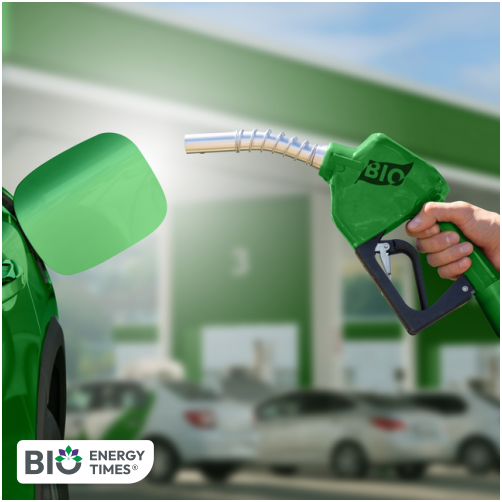
Vietnamese fuel companies have called on the government to ease import taxes on ethanol as the country prepares for the nationwide launch of E10 petrol from June next year.
Businesses have urged the Ministry of Industry and Trade of Vietnam and the Ministry of Finance of Vietnam to consider reducing or removing import duties on ethanol, saying the move would help keep fuel prices in check when E10 becomes mandatory.

From June 1, 2026, all unleaded petrol sold across Vietnam must be blended with 10 percent ethanol under Circular 50/2025/TT-BCT. E5 RON92 petrol will remain available until the end of 2030. Once the rule takes effect, about 75 million motorcycles and more than 5.5 million cars are expected to switch to biofuel-based petrol.
Dang Tat Thanh from the trade ministry said preparations for the nationwide rollout are largely complete. However, he acknowledged that ensuring enough ethanol for blending remains a challenge.
Vietnam currently relies on both local production and imports for ethanol supply. The country has six ethanol plants with a combined design capacity of around 500,000 cubic metres a year, which can meet only 40 to 50 percent of the ethanol needed for E5 and E10 petrol.
To make up the shortfall, ethanol is imported from major producers such as the United States and Brazil, as well as from regional hubs including Singapore and South Korea.
Ho Ngoc Linh of Petrolimex said the company has been selling E10 petrol on a trial basis since August 2025 at 36 fuel stations in Ho Chi Minh City. He said the company has upgraded its facilities and processes to ensure the fuel meets quality requirements.
Linh said domestic ethanol supply is still not enough, making imports unavoidable. Cutting or removing import taxes on ethanol would lower production costs for E10 and help consumers accept the new fuel more easily, he added.
He also noted that Petrolimex imports all the petrol used for blending, as Vietnam’s two oil refineries cannot supply fuel of the required quality for E10. High import costs and limited supply, he said, directly affect pump prices. The company has therefore suggested a review of current fuel standards to better match actual market conditions.
Nguyen Thuy Hien, deputy director at the trade ministry’s domestic market department, said rolling out E10 successfully will require cooperation between government agencies, fuel companies and consumers.
She said rules and policies need to be reviewed to make them clearer and easier to apply, while ethanol producers should be supported to ensure stable supply. Fuel distributors also need a clear legal framework to calculate costs, handle taxes and invest in upgrading their networks.
Hien said the concerns raised by businesses are reasonable and confirmed that the ministry has already submitted policy proposals to the government and the prime minister. Among the key issues under review are special consumption and environmental taxes, which companies say are difficult to implement in practice.
She added that the trade ministry is working with the finance ministry to adjust tax policies and support large-scale E10 use. Businesses have also asked for faster completion of national fuel standards so that all legal and technical requirements are in place before the June 2026 rollout.