

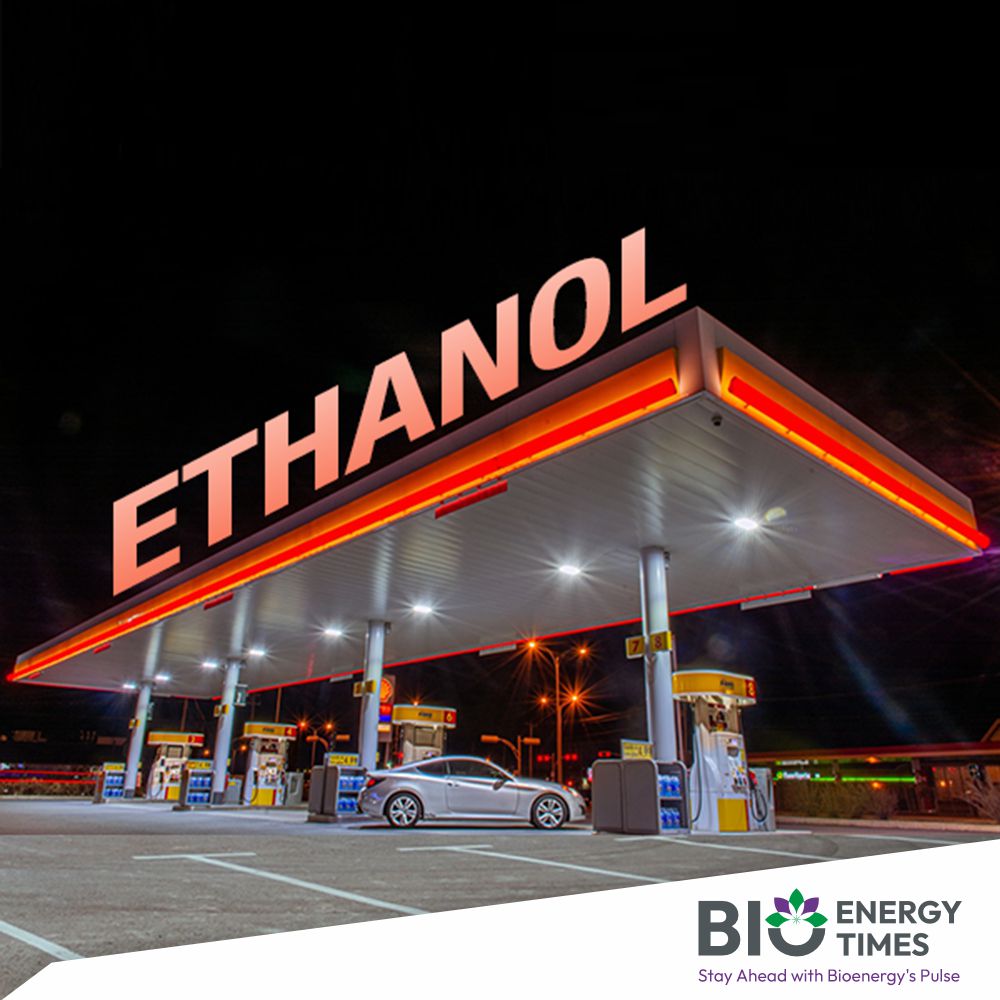
The Irish Cattle and Sheep Farmers’ Association has urged the European Commission to prioritise imports of Bioethanol from Brazil, citing rising fuel prices and growing energy security concerns, according to a report by Agriland.
The call comes as global oil prices surged past $100 per barrel amid escalating tensions linked to the Middle East conflict, which has disrupted energy markets.

Shipping through the Strait of Hormuz—a key route between Iran and Oman that typically handles around one-fifth of global oil trade—has reportedly halted after the passage was closed by Iran, adding further pressure to global fuel supply.
Against this backdrop, Edmond Phelan, Rural Development chair of the Irish Cattle and Sheep Farmers’ Association, said Europe should focus on expanding supplies of bioethanol to strengthen energy resilience.
“Events in the Middle East have upended energy markets in a matter of days, and we are seeing fuel prices skyrocketing,” Phelan said.
He noted that Ireland already blends bioethanol with petrol through the E10 fuel standard and argued that increasing bioethanol use could help Europe meet renewable energy targets while reducing dependence on volatile oil markets.
“If the European Commission is determined to expand trade with Brazil, it should focus on sectors that do not harm vulnerable farm enterprises,” Phelan said, adding that bioethanol imports would better serve Europe’s energy needs.
The association also criticised the proposed EU‑Mercosur trade agreement, warning that increased beef imports from South America could undermine European livestock farmers.
Phelan said it would be “reckless” for the European Commission to provisionally apply the deal before it is fully examined by the European Court of Justice and debated by the European Parliament.
“At a time when fuel costs are soaring, it makes far more sense for Europe to focus on importing products we actually need, such as bioethanol, rather than flooding already vulnerable beef markets with imports we do not need,” he said.
The association added that strengthening Europe’s energy security while protecting domestic food production should remain key priorities for policymakers.