
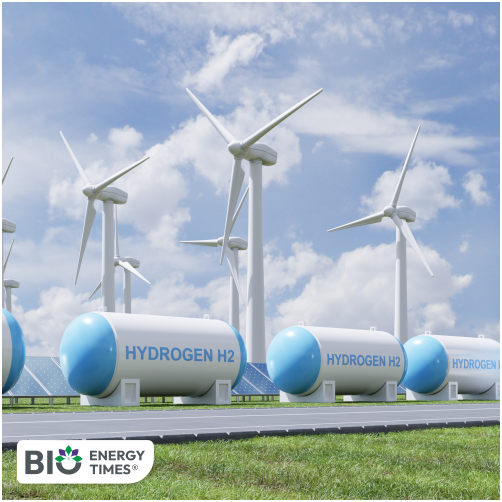
India’s hydrogen demand is expected to almost double to about 12 million tonnes per year by 2030, largely driven by fertilisers, refining and petrochemicals, according to a report by Nuvama Institutional Equities cited by news agency ANI.
The Economic Times reports that the report estimates that fertilisers will remain the biggest consumer, accounting for more than half of total demand at around 6.1 million tonnes per annum (mtpa). Refineries are projected to require about 4.5 mtpa, while demand from the petrochemical sector is expected to rise to 1.3 mtpa as new capacities are added.

Over the longer term, the report said green hydrogen use could widen beyond these traditional sectors to include steelmaking, long-distance transport, shipping and power generation.
India’s hydrogen push is centred on the National Green Hydrogen Mission, which has a total outlay of nearly ₹19,700 crore. A large part of this funding is linked to the Strategic Interventions for Green Hydrogen Transition (SIGHT) scheme, which supports green hydrogen production, its use and the domestic manufacture of electrolysers. Additional support is being provided through pilot projects and research and development programmes.
Since the green hydrogen policy was announced in 2022 and the Mission was launched in early 2023, 13 states have introduced their own incentive packages. These include waivers on transmission charges, subsidies, interest support, skill development initiatives and concessions on land and state-level taxes. Together, central and state incentives could add up to about $61 billion, or roughly ₹5.5 lakh crore, creating a wide base for industry participation.
Despite strong policy backing, high costs continue to be a major challenge. The report said green hydrogen currently costs around $3.5 to $4 per kilogram, compared with about $2.2 per kilogram for grey hydrogen.
It noted that a combination of policy support and market improvements could narrow this gap by as much as $1.9 per kilogram. Waivers on power banking and open access charges are expected to deliver a significant share of the savings, along with falling electrolyser prices and lower renewable energy tariffs.
On exports, the report said India faces competition in green ammonia markets, where recent tender prices have ranged between $594 and $774 per tonne. Although India benefits from relatively low solar and wind power costs, higher financing expenses and lower plant utilisation levels could affect its competitiveness.
From a technology perspective, electrolyser stack costs could drop by up to 75 per cent through innovation, the use of alternative materials and increased domestic manufacturing. The report added that as much as 88 per cent of the electrolyser supply chain could be localised over time, reducing reliance on imports.
While the use of green hydrogen in sectors such as steel, transport and power generation is likely to pick up after 2030, the report said current efforts are focused mainly on lowering costs and building the basic infrastructure needed to support large-scale adoption.