
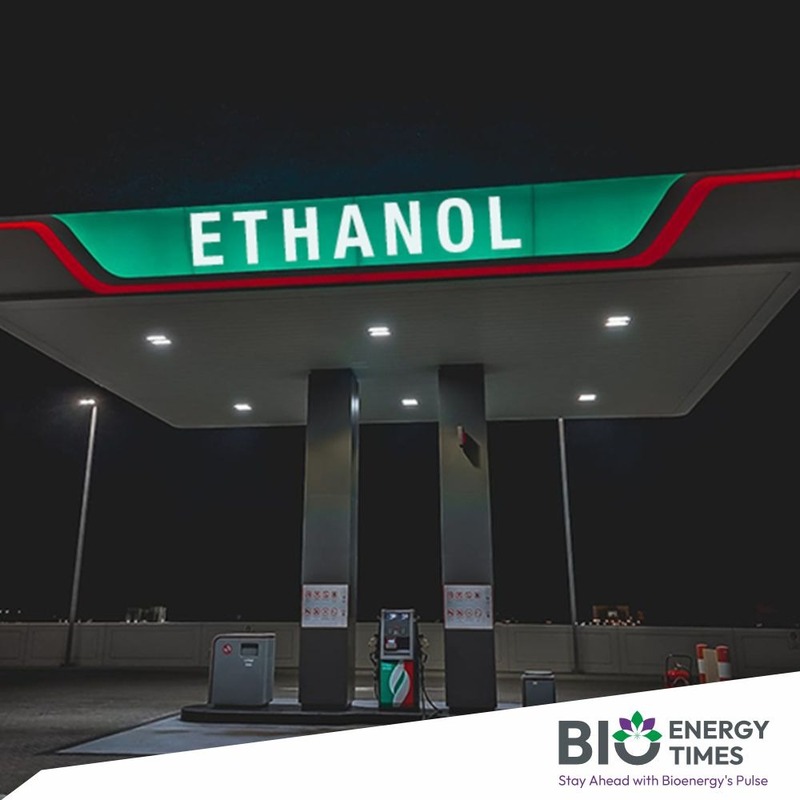
Maersk is moving forward with efforts to broaden its low-emission fuel portfolio, advancing plans to test ethanol in a dual-fuel methanol engine. Following a successful initial trial, the company will next run a 50/50 ethanol–methanol blend onboard the vessel Laura Mærsk.
The first test, carried out in October and November, used a blend of 10% ethanol and 90% e-methanol, confirming that ethanol can be safely and efficiently incorporated into the fuel mix. The results highlight the potential to increase flexibility across Maersk’s dual-fuel methanol fleet, effectively making way for dual-fuel alcohol-powered vessels.

“We believe the shipping sector needs multiple fuel pathways to achieve its climate goals,” said Emma Mazhari, Head of Energy Markets at Maersk. “That means deliberately testing and evaluating different options and technologies.”
The Laura Mærsk, the world’s first methanol-enabled dual-fuel container ship, was originally designed to run on methanol. Because ethanol and methanol are both alcohols with similar characteristics, Maersk’s initial trial aimed to determine whether a 10% ethanol blend could ignite and burn as efficiently as pure methanol while maintaining comparable lubricity and corrosion levels.
Test results confirmed that methanol–ethanol blends do not compromise engine performance, opening the door to higher ethanol ratios. After the planned E50 test, Maersk intends to carry out a full-scale trial using 100% ethanol.
“Ethanol comes with a strong track record, a mature market, and existing infrastructure, offering another viable route to decarbonisation,” Mazhari added. “By steadily increasing ethanol content, we can better understand engine behaviour and combustion effects, informing future fuel sourcing.”
Maersk committed in 2021 to ordering only dual-fuel capable vessels as part of its strategy to future-proof the fleet. By 2025, the company expects to have 19 such vessels in operation. Its current low-emission fuel portfolio includes bio- and e-methanol, biodiesel, and—starting in 2027, liquefied biomethane and LNG (as a fossil alternative) with the arrival of time-chartered dual-fuel LNG ships.