
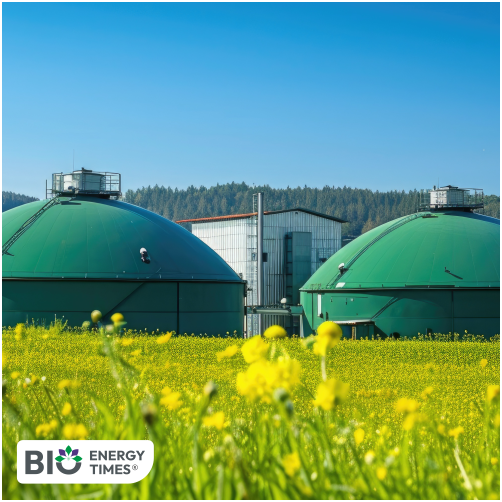
Biogas and biomethane could help Colombia reduce its dependence on foreign natural gas during periods of supply pressure, according to the Ministry of Mines and Energy, reports Bnamericas.
The ministry said studies carried out by the Mining and Energy Planning Unit (UPME) show that Colombia has strong potential to produce biogas and biomethane using agricultural waste, livestock residues and organic urban waste.

To make use of this potential, the ministry has issued a draft decree proposing technical rules for bringing these alternative fuels into the energy system. The proposal would amend Decree 1073 of 2015 and introduce changes to how locally produced and imported gas is declared and sold.
The ministry said recent developments in the natural gas market have exposed structural weaknesses that require government action. It said intervention is needed to address market imbalances, protect competition, ensure supply security and safeguard consumers.
According to the ministry, gas producers have been reporting steadily lower production capacity. Current projections suggest output could fall to between 750 and 780 billion British thermal units per day by 2027, compared with earlier estimates of more than 1,000 BBTU per day.
It added that actual gas production has been running 5 to 15 per cent below declared capacity due to maintenance work, operational issues and the natural decline of mature gas fields. This has increased Colombia’s reliance on imported gas, exposing the country to international price fluctuations and logistical risks.
Industry body Naturgas said Colombia now has limited flexibility because of falling domestic gas supply, rising imports and delays in major strategic projects. It said average gas supply over the past five years stood at about 1,074 BBTU per day, but declining local production has meant that between 7 and 19 per cent of gas used in 2024 and 2025 had to be imported. So far this year, imports account for about 20 per cent of total gas consumption.
The Ministry of Mines and Energy has invited public comments on the draft decree, which can be sent by email. The full proposal and supporting documents have been made available for review.