

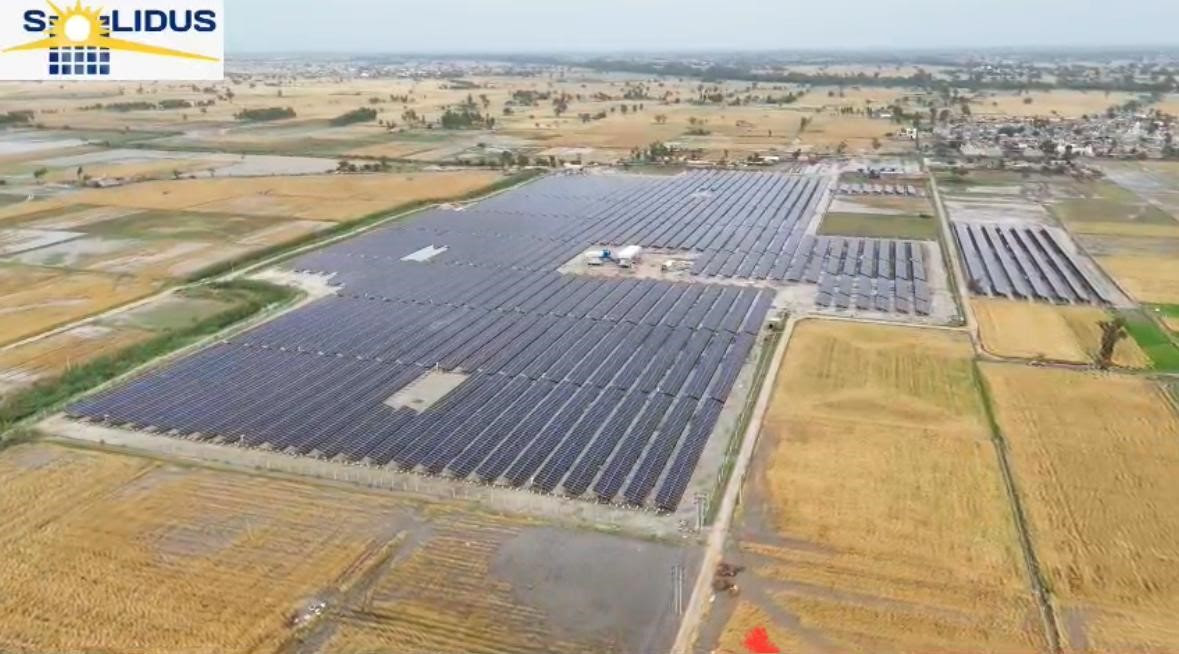
The Central Electricity Regulatory Commission (CERC) has granted a full waiver of Inter-State Transmission System (ISTS) charges to a 50 MW wind-solar hybrid project developed by AMPIN Energy Green Private Limited and AMPIN Energy Green Three Private Limited, after extending its scheduled commercial operation date (SCOD) to February 28, 2026, Solar Quarter reported.
The Commission ruled that the project qualified for the waiver available to renewable energy projects that achieved commercial operation on or before June 30, 2025, as its commissioning was delayed by the non-availability of the required transmission infrastructure.

In its order on Petition No. 228/MP/2026, CERC noted that the project was designed to connect to the Fatehgarh-IV ISTS Pooling Station. While the generating facility and its dedicated transmission lines were substantially complete and ready before the June 30, 2025, deadline, the project could not commence operations because the associated interstate transmission substation was not available.
The delay arose from the commissioning of the Fatehgarh-IV ISTS substation by the Central Transmission Utility of India Limited (CTUIL). The critical infrastructure was charged on January 31, 2026, preventing the project from beginning commercial operations within its original schedule.
After the substation became available, the developers completed the remaining testing and commissioning work within 28 days. The project commenced commercial operations on February 27, 2026, while February 28, 2026, was recognised for the purpose of the regulatory relief.
AMPIN Energy subsequently sought an extension of the SCOD and a waiver of ISTS charges from a specially constituted CERC committee. The developers maintained that the delay was beyond their control, despite their efforts to complete the project and its associated transmission facilities within the prescribed timeline.
The committee conducted a prudence check to assess the reasons for the delay, the project’s readiness and the time needed to complete the final commissioning activities. It concluded that the developers had exercised due diligence and that the 28-day period taken after the transmission infrastructure became available was reasonable and consistent with industry practices.
The committee’s recommendations, submitted through reports dated September 30, 2025, and March 26, 2026, were considered by the Commission before it took its decision.
CERC examined the petition under Regulation 13(2)(h) of the CERC (Sharing of Inter-State Transmission Charges and Losses) Regulations, 2020. The provision covers cases in which renewable energy projects face delays because the required transmission system is unavailable. It permits extensions of up to two periods of six months each beyond the June 30, 2025, cutoff, subject to the applicable conditions.
Accepting the committee’s recommendations, the Commission extended the project’s SCOD to February 28, 2026, and approved a 100% waiver of ISTS charges, treating the project as eligible for the relief applicable to renewable energy projects commissioned by June 30, 2025.
The order was issued by a CERC bench comprising Chairperson Jishnu Barua and Members Ramesh Babu V, Harish Dudani and Ravinder Singh Dhillon. The Commission subsequently disposed of the petition, granting relief to the developers for the delay caused by the unavailability of essential transmission infrastructure.