

On a hillside amid rice fields in Beber Village of Central Lombok, West Nusa Tenggara, a growing business is supplying biomass fuel to coal-fired power plants, reflecting how Indonesia’s energy transition is reshaping rural economies, reports Antara Indonesian News Agency.
On a recent morning, entrepreneur Syamsul Hadi was busy handling phone calls as he negotiated with a vehicle dealer for the purchase of eight trucks and a sport utility vehicle. The expansion is driven by rising demand for biomass as part of the government’s co-firing programme at power plants.

Hadi, 34, is the founder of PT Syahroni Rizki Mandiri, a company that supplies biomass to the Jeranjang Steam Power Plant in West Lombok and the West Sumbawa Steam Power Plant. As the use of biomass grows in line with efforts to cut greenhouse gas emissions from electricity generation, his business has expanded rapidly, prompting plans to increase his fleet from 11 to 19 trucks.
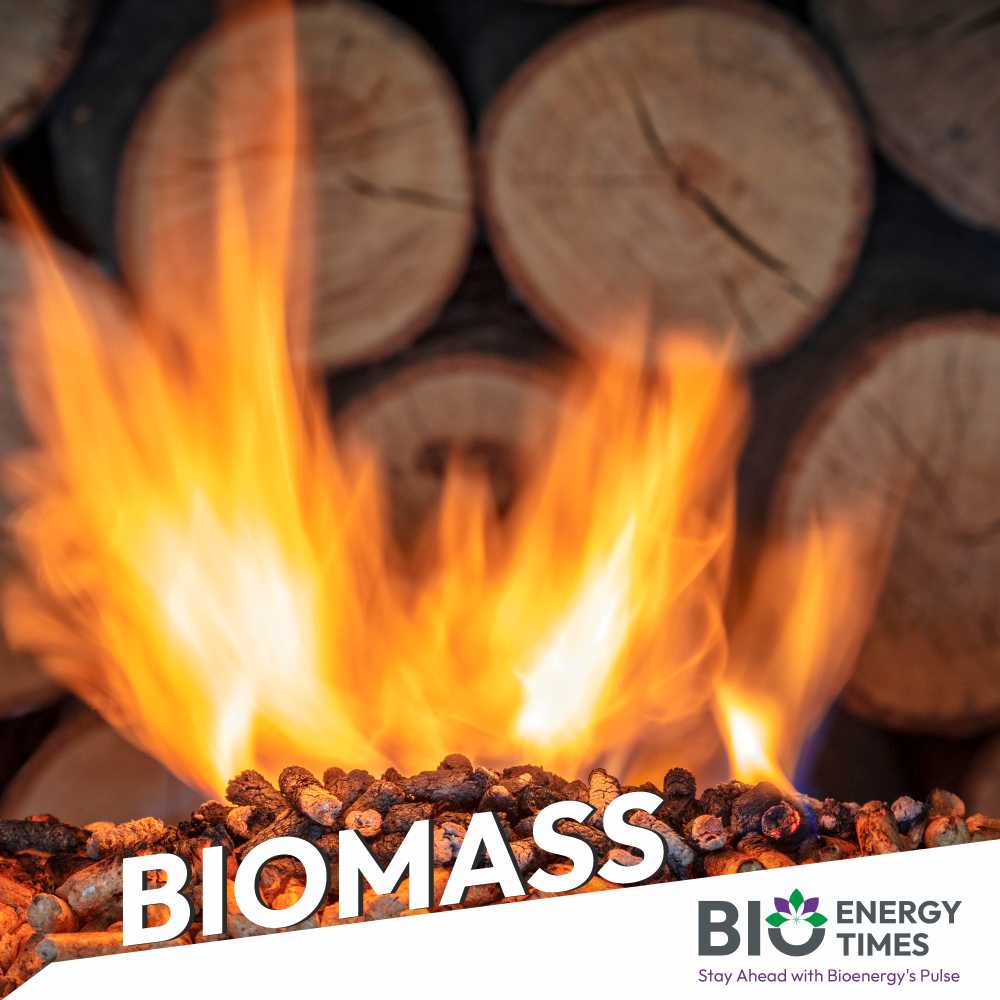
Biomass co-firing, which uses plant matter, wood and organic waste as partial substitutes for coal, has gained popularity because it can be applied with minimal changes to existing power plant boilers. The approach reduces costs compared with installing new clean coal technologies or carbon capture systems, while still lowering emissions.
The growth of the biomass industry is also changing village economies by creating jobs and raising incomes. Materials once treated as waste, such as sawdust and tree-cutting residue, are now processed into fuel for power plants.
Hadi, who began working in the timber trade in 2006, said the biomass sector has created new market opportunities for rural communities and ensured steady economic activity at the village level. He said his workforce has grown from about 10 people during his timber business days to around 50 direct employees today.
Despite being based in a rural area, workers earn an average monthly income of about Rp5 million, well above the district and provincial minimum wages in West Nusa Tenggara, which stand at around Rp2.6 million. Jobs range from machine operators and drivers to loading and unloading workers.
In September 2022, Hadi decided to focus entirely on supplying biomass after studying the sector and holding discussions with the regional office of state-owned power utility PLN. He secured his first three-month contract in February 2023 to supply 100 tonnes of biomass.
Since then, the company’s capacity has expanded to about 2,500 tonnes per month, supported by a long-term cooperation agreement with PLN spanning 10 years.
The programme has also driven innovation in villages. Hadi initially built a woodchipping machine using a diesel engine, but later adapted damaged dump truck engines into more powerful units. Today, his company operates 33 woodchippers, manages 40 biomass storage warehouses and employs more than 500 workers across its operations.
To ensure long-term supply, Hadi has begun promoting the cultivation of energy trees in partnership with the Wanna Lestari Community Forest in East Lombok. The initiative involves 530 families managing a 420-hectare social forestry area.
In January 2025, around 50,000 seedlings, including sengon and eucalyptus, were planted across 76 hectares on the slopes of Mount Rinjani. Another 50,000 seedlings are scheduled to be planted in December 2025.
The biomass co-firing programme is encouraging villages to become energy producers rather than just consumers. It has created a local supply chain involving farmers, waste collectors, processors, suppliers and power plants, supporting thousands of livelihoods.
Indonesia’s growing population, increased mobility and digitalisation have pushed up energy demand, prompting the government to promote renewable energy and reduce dependence on coal.
Biomass is increasingly viewed as a transitional solution to support energy security while the country moves toward its net-zero emissions target.
Jeranjang Power Plant Business Unit Manager Yunisetya Ariwibawa said biomass use at the plant has risen steadily. In 2024, the facility used nearly 29,000 tonnes of biomass, producing more than 25,000 megawatt-hours of green electricity. For 2025, it is targeting biomass use of 35,200 tonnes, expected to generate close to 28,850 megawatt-hours.
Economist Muhammad Firmansyah from Mataram University described wood processing waste used for biomass as “brown gold,” noting that its potential remains largely untapped. He said the sector benefits from a steady supply of raw materials, growing demand for clean energy and relatively low input costs.
Firmansyah added that linking factories, village cooperatives and energy buyers could help build a sustainable biomass ecosystem. With proper management, he said, the programme could generate jobs, support rural incomes and contribute to poverty reduction.
As Indonesia pushes ahead with its energy transition, wood waste that was once overlooked is increasingly being seen as a valuable resource, supporting both cleaner power generation and stronger village economies.