
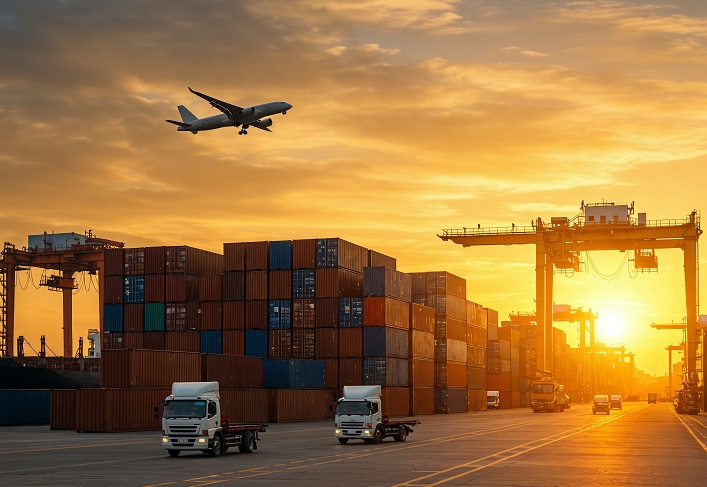
India’s logistics sector is standing at the threshold of a once-in-a-generation transformation. Poised to nearly triple in size to an estimated ₹120 trillion by 2035, the sector’s rapid evolution is being powered by an unprecedented infrastructure push and the Government of India’s ambition to rank among the world’s top 25 logistics performers by 2030. Landmark initiatives such as the ₹100 lakh crore Pradhan Mantri Gati Shakti National Master Plan, Dedicated Freight Corridors, Bharatmala Pariyojana and the Sagarmala Programme are collectively laying the foundation for a future-ready, multimodal logistics ecosystem. By seamlessly integrating road, rail, ports, airports and inland waterways, these interventions are eliminating long-standing bottlenecks, enhancing efficiency and unlocking new levels of competitiveness, positioning India as a globally connected logistics hub.
Against this backdrop of accelerated growth, Messe Stuttgart India, a subsidiary of Landesmesse Stuttgart GmbH & Co. KG, Germany, will present the third edition of LogiMAT India 2026, the country’s largest intralogistics and supply chain exhibition. Bringing together over 350 leading global brands from 10 countries and showcasing 500+ innovations, the exhibition will serve as a key convergence point for policymakers, industry leaders and decision-makers from both the public and private sectors.

In keeping with the Government of India’s Viksit Bharat vision, LogiMAT India functions as a strategic platform that fosters collaboration and long-term sectoral growth. By driving critical conversations around infrastructure modernisation, digitalisation, automation, sustainability and global competitiveness, the exhibition enables meaningful dialogue, knowledge exchange and partnerships that are essential to building a resilient, future-ready logistics ecosystem. In the third edition, LogiMAT India 2026 are going beyond to catalyse tangible outcomes, including strategic MoU’s, addressing the skill gap in logistics through their partnership with Logistics Skill Council of India, and giving platform to startups. Together, these developments will further accelerate India’s transition towards a more efficient, competitive and globally integrated logistics landscape, reinforcing its aspiration to achieve a top-25 ranking on the World Bank’s Logistics Performance Index by 2030.
Taking place from February 5-7, 2026, at the Bombay Exhibition Centre, Mumbai, LogiMAT India 2026’s notable partners include Addverb Technologies, Racks and Rollers, Armstrong Dematic, Jungheinrich India, SOTI, and Jay Storage Solutions. Leading associations, such as the Indian Chamber of International Business, Warehousing Association of India, Indo-French Chamber of Commerce, Indo-American Chamber of Commerce, and the All India Warehousing Welfare Association, will be instrumental in fostering collaboration, bilateral trade, and industry best practices during the event.
Gaurav Sood, CEO & Managing Director, Messe Stuttgart India, said, “India’s logistics industry is at a defining moment, driven by robust government vision, infrastructure investments, and rapid technological adoption. LogiMAT India 2026 embodies this momentum, uniting global innovators, policymakers, and industry leaders under one roof to accelerate our journey to the World Bank’s Top 25. Together, we are not only strengthening India’s logistics backbone but also unlocking the sector’s immense economic potential for years to come.”
As the industry’s landscape becomes more agile, connected, and future-ready, LogiMAT India 2026 offers an unparalleled platform for networking, business expansion, and the exchange of advanced solutions. This year’s event will grow the Elevate Startup Pavilion spotlighting cutting-edge innovations in logistics, shipping, freight, and green transportation, while the India-Germany partnership showcase at the German Pavilion is set to catalyze bilateral trade and investment growth in India’s logistics sector. Attendees can expect the release of sector-defining white papers and a robust conference program covering topics such as AI in logistics, natural language processing, automation, robotics, supply chain optimization, shipping, and freight.