
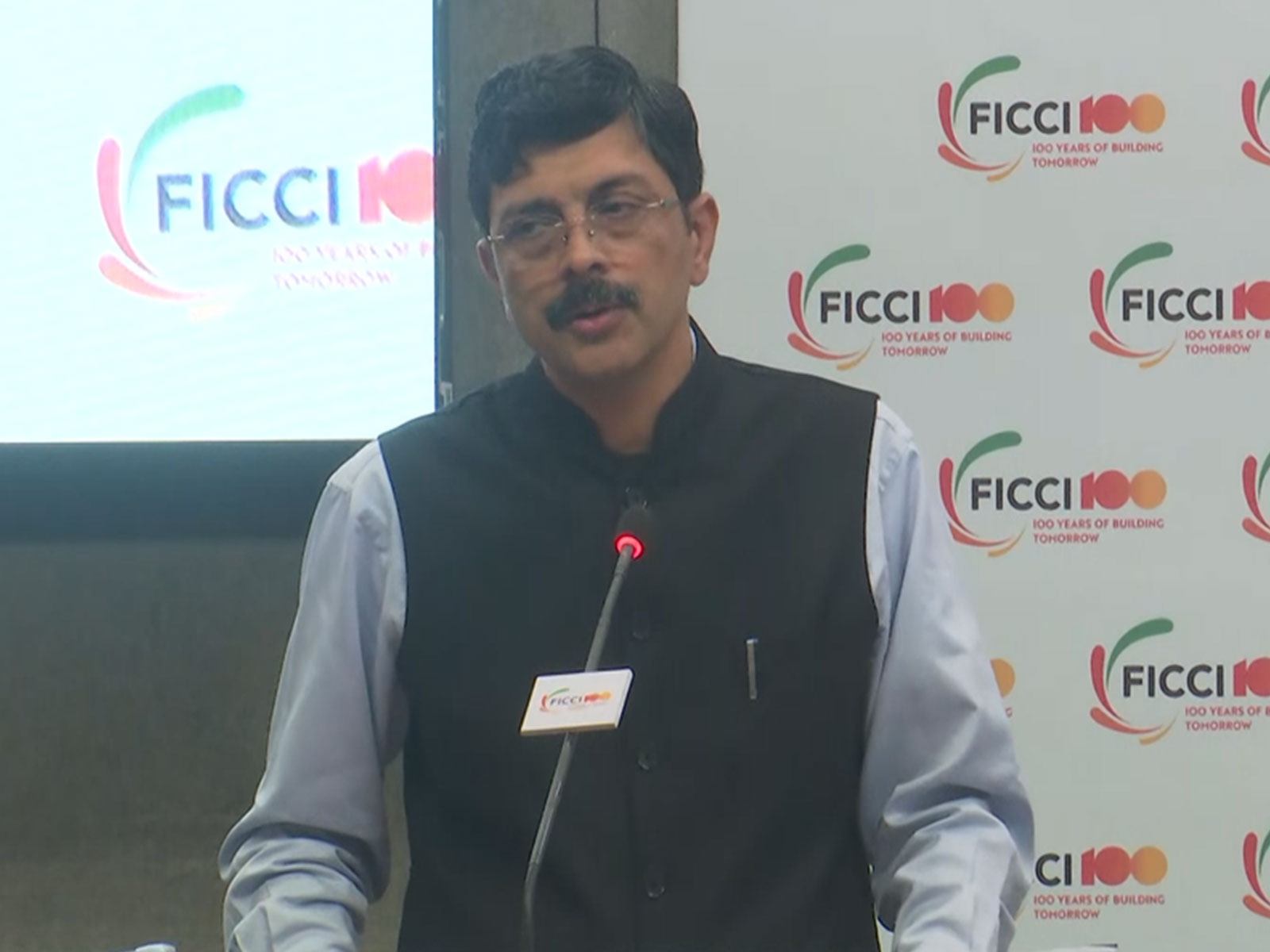
New Delhi: India’s non-fossil power generation capacity has crossed 300 GW, but managing the grid and expanding transmission infrastructure have emerged as key challenges for the power sector, Power Secretary Pankaj Agarwal said on Thursday, ANI reported.
“We are already at 300 gigawatts of non-fossil, and now going forward, the challenges are entirely different. Grid management itself is a challenge, and building transmission systems is a challenge,” Agarwal said.

He was speaking to reporters on the sidelines of the 2nd Indian Power Sector Conference, titled “Building a Reliable, Flexible and Market-Ready Power System”.
Agarwal said the government has moved a Cabinet note for inter-ministerial consultation on a new power policy, which is being prepared in view of the changing requirements of the sector and the objectives of Viksit Bharat 2047.
He said the existing power policy was issued in 2005, when the power sector faced different challenges, including shortages and limited access to flexibility. At that time, the country was also beginning to explore new renewable energy sources such as solar and wind.
“The last policy we issued in 2005, there were very different sets of challenges. Access to flexibility was one such challenge and shortages were another challenge. We were only initiating at that point of time and thinking about new sources of renewable energy, the sun and the wind,” he said.
The Power Secretary said the sector now needs financially sustainable, self-reliant and technology-driven distribution companies to meet emerging requirements.
“I think that is another way forward, where we need to really go,” he said.
Agarwal also called for greater promotion of open access to help Indian industries remain competitive and encourage them to shift towards green power.
“Open access, yes, because if we really want our industry to be competitive, we need to promote open access in a big way,” he said.
On the utilisation of the power grid, Agarwal said fluctuations were inevitable, but better use of existing transmission infrastructure would be important. He said using around 60% of grid capacity despite these fluctuations would be a reasonable approach.
“If the grid is utilised better, say 24 by 7, that is the best. You can’t expect the grid to be utilised 24 by 7 at a particular level. There will be fluctuations, but given those fluctuations, if we can really use 60 per cent of the grid capacity, I think that is a fairly good strategy,” he said.
On smart meters, Agarwal said Indian chip developers and manufacturers were working on designing chips that would be tested and validated before commercial production. Procurement of such products would provide an assured market for domestically designed chips and meters using these chips, he said.
Addressing coal availability for power plants, Agarwal said unusual rainfall patterns had affected coal supplies in producing regions, even as electricity demand remained high in consuming areas.
“Particularly in this month of September, coal-based electricity generation demand is elevated by 14 per cent plus,” he said.
He said Coal India Ltd, captive mining companies and commercial coal producers were working to address the supply situation. There was currently no logistics constraint, with more than 440 coal rakes being received daily, he added.
“Domestic supply is actually very good. Now it has picked up and with the recession in rainfall, production will only go up,” Agarwal said.
He also said an option had been provided to import 654 MW of power through the power market, except during the 1800-2400 hours period. This allows power imports for 18 hours a day, depending on demand and market bidding.
The proposed new power policy is aimed at addressing the sector’s changing requirements, including greater flexibility, improved grid management, transmission expansion, distribution reforms and increased participation of industry through open access, according to ANI.