
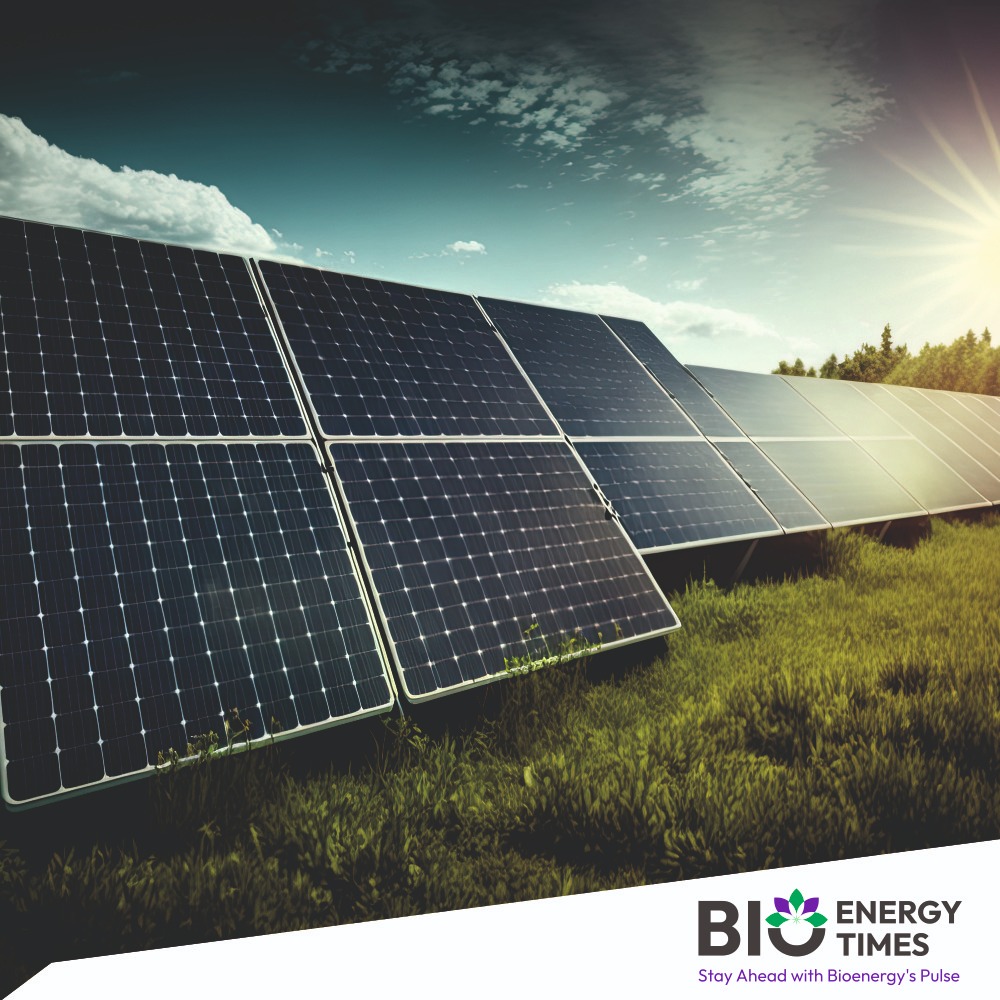
Union Minister for New and Renewable Energy Pralhad Joshi highlighted India’s landmark clean energy progress, announcing that the country has achieved its highest-ever addition of non-fossil fuel capacity in the current financial year—31.25 GW, including 24.28 GW of solar power. Speaking at the Global Energy Leaders’ Summit 2025 in Puri, Odisha, he also unveiled a new initiative for the State: a 1.5 lakh rooftop solar ULA model aimed at empowering 7–8 lakh residents.
Joshi noted that while the world took nearly seven decades to reach its first terawatt of renewable energy in 2022, it reached the second terawatt by 2024—adding it in just two years. India, he said, is a key contributor to this global acceleration. The country’s solar capacity has surged from 2.8 GW to about 130 GW in the last 11 years—a growth of more than 4,500 percent. Between 2022 and 2024 alone, India added 46 GW of solar capacity to global totals, making it the third-largest contributor during that period.

He also pointed out that India, despite holding the world’s fifth-largest coal reserves and being the second-largest coal consumer, is steadily balancing its coal usage with a rapid shift toward renewable energy. Global policy and regulatory changes, he added, are now shaping industrial competitiveness, making India’s renewable transition even more urgent and strategically vital.
Odisha Steps Up Renewable Energy Efforts
Announcing a major initiative for the State, Joshi confirmed the approval of a consumer-owned Utility-Led Aggregation (ULA) model under the PM Surya Ghar programme for the installation of 1.5 lakh rooftop solar systems of 1 kW each. The scheme is expected to directly benefit roughly 7–8 lakh people, particularly economically weaker households.
He highlighted Odisha’s growing clean energy momentum. The State has already installed over 3.1 GW of renewable capacity, with clean energy now contributing more than 34 percent of its total installed power capacity. Under the PM Surya Ghar Yojana, 1.6 lakh households in Odisha have applied for rooftop solar systems, over 23,000 installations have been completed, and more than 19,200 families have received subsidies amounting to over ₹147 crore directly into their bank accounts.
Joshi credited India’s broader renewable energy success to the ecosystem created under Prime Minister Narendra Modi—marked by improved ease of doing business, confident investors, strong infrastructure, demand-driven schemes, and close cooperation between the Centre and States.
Expressing optimism about Odisha’s future, he commended the leadership of Chief Minister Mohan Charan Majhi, Deputy Chief Minister Kanak Vardhan Singh Deo, and the people of the State for their commitment to renewable energy and green technology.