
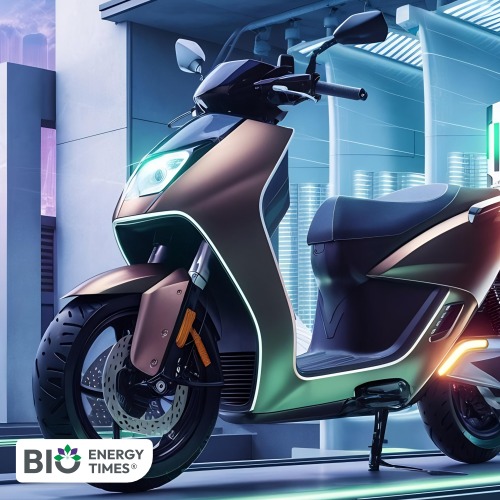
The upcoming Union Budget could introduce a sharper set of fiscal and policy measures aimed at speeding up the adoption of electric vehicles (EVs) in India, with a focus on strengthening domestic manufacturing and attracting investment across the clean mobility ecosystem.
In an interaction with ANI, Sheena Sareen, Partner at Deloitte India, said the government is expected to announce initiatives that reinforce India’s transition to sustainable transportation by boosting local manufacturing capabilities and expanding support for clean mobility solutions.

She said a reworking of the Production-Linked Incentive (PLI) scheme for EVs and advanced automotive components, along with selective tax benefits for research and development and capital goods manufacturing, could help the sector achieve greater scale and global competitiveness.
As per tradition, the Union Budget for 2026–27 is scheduled to be presented in Parliament on February 1, 2026.
Deloitte India’s analysis indicates that such policy interventions would reduce dependence on imported technologies, promote indigenisation, and help curb crude oil imports, leading to savings in foreign exchange. Sareen noted that these measures would be crucial in expanding EV manufacturing capacity and lowering reliance on overseas inputs.
She also pointed out that easing eligibility norms under incentive schemes could allow more companies to benefit. “This would help firms that have so far been unable to access incentives because of stringent qualification criteria,” she said, emphasising the central role of R&D in building a robust EV ecosystem.
According to Sareen, tax incentives aimed at innovation could accelerate the localisation of key EV components such as batteries and power electronics. The industry, she said, is also seeking relaxed domestic value addition requirements and lower investment thresholds under the PLI framework, which would enable more manufacturers—including startups and component suppliers—to qualify.
She further highlighted expectations around a proposed capital goods incentive scheme with defined thresholds for the automotive and EV sectors. Such a move, she said, would promote domestic production of capital goods, an area where the industry remains heavily import-dependent, and strengthen the EV value chain over the long term.
On indirect taxation, Sareen observed that there is limited room for further rationalisation of GST rates on vehicles, as recent reforms have already addressed disparities across segments. Smaller vehicles now attract GST of around 18%, while mid-sized and larger vehicles are taxed at close to 40%, making additional across-the-board cuts unlikely.
However, she said concerns persist over the inverted duty structure, which pushes up costs for vehicle and EV manufacturers. Extending refunds on inverted duties to capital goods and input services, or linking refunds to exports, could significantly enhance cost competitiveness.
“These costs eventually get built into vehicle prices. Any relief on this front would directly improve EV affordability and adoption,” she said.
Sareen also underscored the need to simplify customs procedures, particularly those related to the Special Valuation Branch (SVB) for imports from related parties. Streamlining SVB norms and removing provisional duty requirements could improve supply chain efficiency and provide greater clarity on import costs.
On the sustainability front, she noted that India’s move toward cleaner mobility is currently being driven by Corporate Average Fuel Efficiency (CAFE) norms rather than immediate carbon taxes or green levies. As these frameworks evolve, they are likely to further encourage electrification, hybrid technologies, and other low-emission solutions.
Sareen added that a balanced combination of EV-focused incentives, tax support, and regulatory certainty in the forthcoming Budget could advance India’s clean energy objectives, reduce dependence on fossil fuels, and strengthen the country’s external balance over time.