
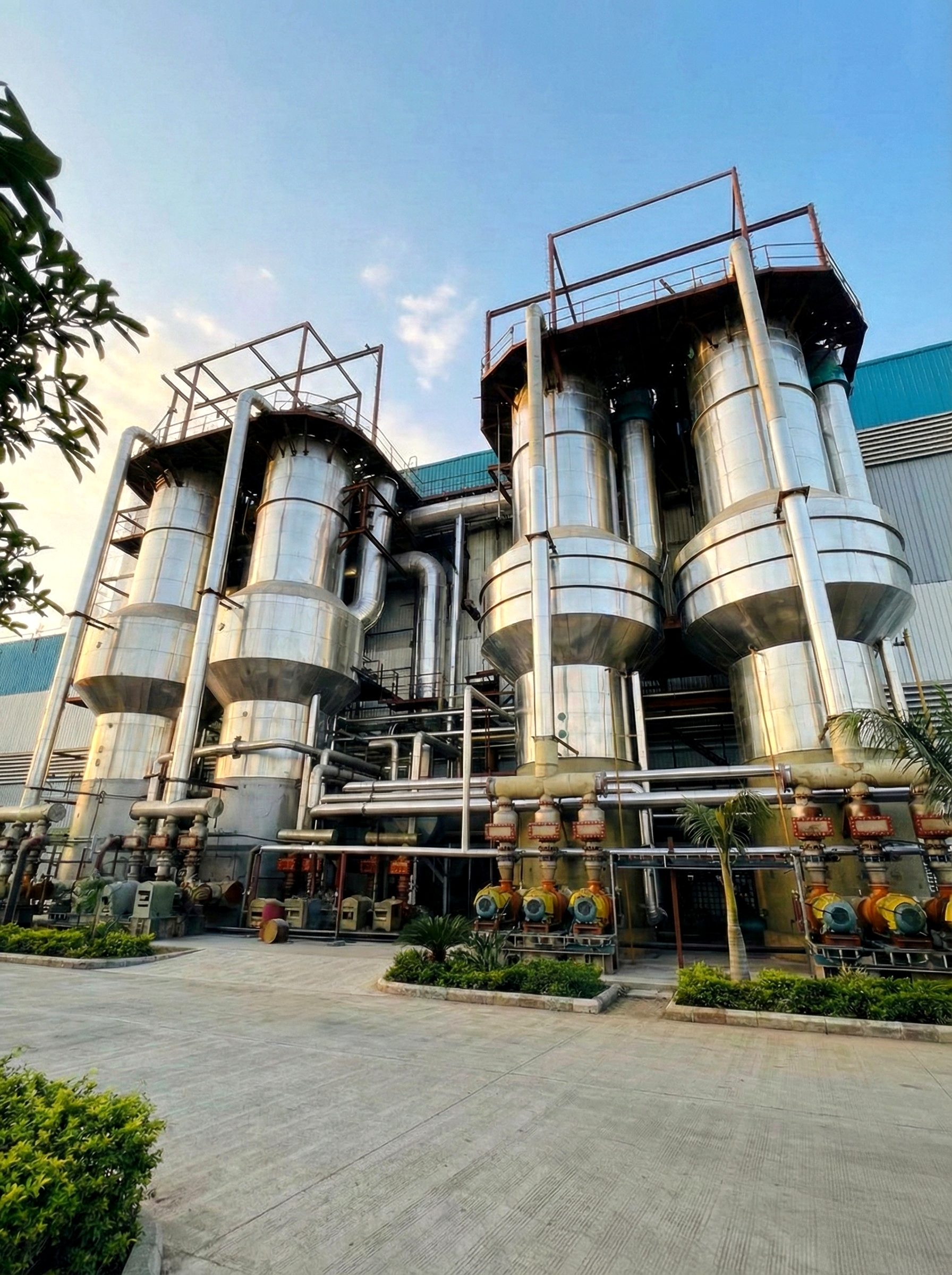
Spray Engineering Devices Limited (SED), an Indian clean-tech process engineering company, has announced the successful delivery and commissioning of key modernization and expansion technologies at Parag Agro Foods & Allied Products Pvt. Ltd.’s sugar plant in Ravadewadi, Pune, Maharashtra. The upgrade has increased the facility’s crushing capacity to 7,000 tonnes of cane per day (TCD) while significantly improving its energy efficiency.
The project incorporates SED’s steam-saving technologies and high-efficiency process equipment, representing a major milestone for both organizations. With the expanded capacity, Parag Agro has strengthened its presence in the sugar sector, operating a facility designed for enhanced thermal performance and a lower carbon footprint through improved energy management.

Commenting on the development, Vivek Verma, Managing Director of SED, said the project reflects the company’s focus on enabling capacity expansion alongside environmental responsibility. He noted that the use of falling film evaporators and honeycomb calandria pan designs, compatible with low-temperature crystallization, has delivered notable efficiency improvements while supporting sustainable growth.
Yashwardhan Dahake, Chairman of Parag Agro Foods & Allied Products Pvt. Ltd., said the modernization has allowed the company to scale up production while reducing operating costs and energy consumption. He added that the adoption of SED’s technologies positions the company to achieve higher performance benchmarks and contribute to wider sustainability objectives within the industry.
Following the upgrade, the plant has already reached its targeted crushing capacity of 7,000 TCD. Steam consumption has been reduced to 21–22% on cane with B-molasses diversion, compared with around 32% prior to the modernization, underscoring the tangible energy savings and productivity gains delivered by the project.
Central to the upgrade are two falling film evaporators (FFEs) commissioned during Phase I, with two more added in Phase II. Each unit has a heating surface of 5,000 square metres and operates at steam pressures of 170–180 kPa, collectively improving steam economy and overall thermal efficiency.
The expansion also includes the installation of three additional Spray Continuous Pan (SCP) chambers, supplementing those commissioned in Phase I. Designed to operate on low-grade vapours rather than prime steam, the SCP system enables controlled boiling at temperatures of 85–90°C, lowers operating costs, and delivers significant energy savings.
The phased modernization programme, spanning Phase I and Phase II, has added two FFEs, three SCP crystallization chambers, and dedicated condensate heaters for raw and sulphited juice. These components are designed to enhance heat recovery and crystallization efficiency across the facility.
All newly installed equipment—including the FFEs, SCP chambers, and condensate juice heaters—has been fully integrated with the plant’s Distributed Control System (DCS). This integration allows real-time monitoring and automated control of critical parameters such as flow, temperature, and levels, improving operational stability and consistency throughout the crushing season.
The project also required careful engineering to align the plant’s existing evaporation systems with the new units, ensuring balanced and reliable operation under varying loads. With commissioning completed in line with the start of the crushing season, Parag Agro is now positioned to meet its expanded production goals while achieving improved energy and cost efficiency.